Heavy Duty TAG - Wireless Sensor
Intelligent HD TAG measures condition data from rail components and tracks
Key Facts
WirelessEasy integration into existing systemsEnergy efficientIntelligent energy management for service life up to 5 yearsRobustOptimized for use in rail vehicles
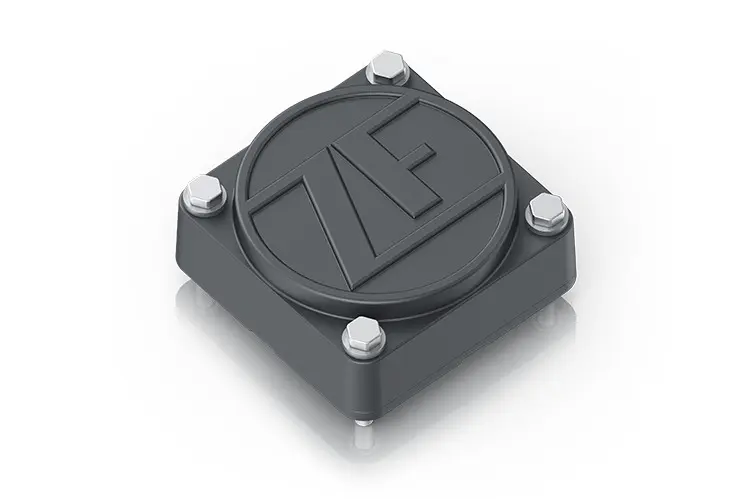
The Bluetooth® wireless sensor Heavy Duty TAG is the base of an intelligent condition monitoring system for various industrial applications. Acceleration and tilt can be recorded. With the HD TAG, for instance, rail operators can measure anomalies in wheel-rail contact, and then, detect the condition of driveline components and rail infrastructure.
Gallery

The IDM system for DMU consists of the Heavy Duty TAG and the VCU Pro Onboard Unit
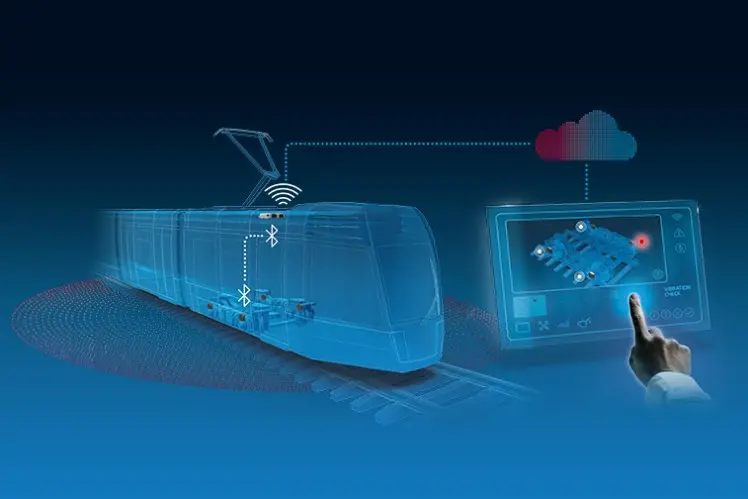
The IDM system for LRV consists of the Heavy Duty TAG and the VCU Pro Onboard Unit
Details
Technical data
| Data transfer |
Bluetooth® Low Energy (2.4 GHz) Sub1GHz ready (868 MHz) |
| Operating temperature | -40°C to +70°C (DIN EN 50155 Class TX) |
| Protection class | IP65 |
| Compliance |
|
| Battery | 3 x Lithium primary batteries, 4 Ah each, service life up to 5 years |
| Data memory | 16 MB Flash |
| Scope of functions |
|
| Only available in the Infrastructure and Driveline Monitoring system |
Benefits
Modular system of sensors, telematics gateways and specific software packages, enables customized solutions for every application
Comprehensive recording of condition data provides early insights regarding wear and damage
Different, intelligent modes enable optimal measurement results, as well as maximum energy efficiency (service life: up to five years)
Function
Predictive Maintenance Planning with ZF Infrastructure and Driveline Monitoring
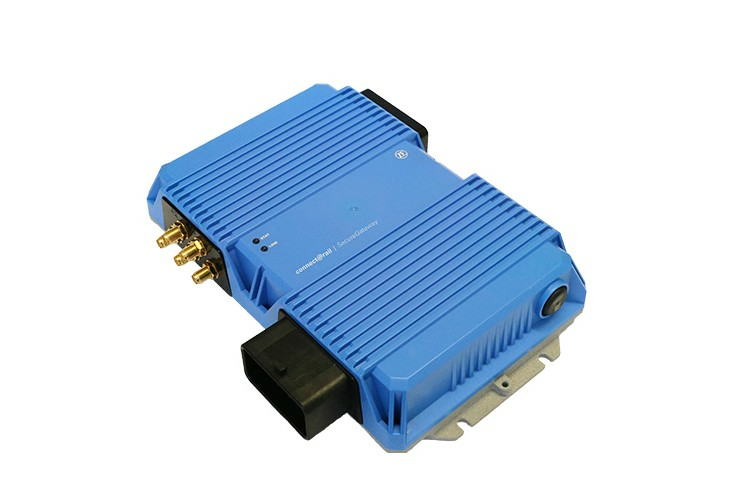
In the infrastructure and driveline monitoring system, the wireless sensor Heavy Duty TAG forms the basis for the condition monitoring of vehicle components and the rail infrastructure. The HD TAG can be mounted either on the transmission or the bogie.The recorded data is transmitted via Bluetooth® Low Energy to a Telematics Gateway (VCU Pro Onboard Unit). Afterwards, the acquired measurement and route data is processed and securely sent to the ZF IoT Cloud. Rail operators obtain up-to-date analysis results, which supports maintenance cycle planning, in order to improve condition, increase efficiency and avoid unplanned downtimes. Wear, damage and potential danger spots are then detected at an early stage.
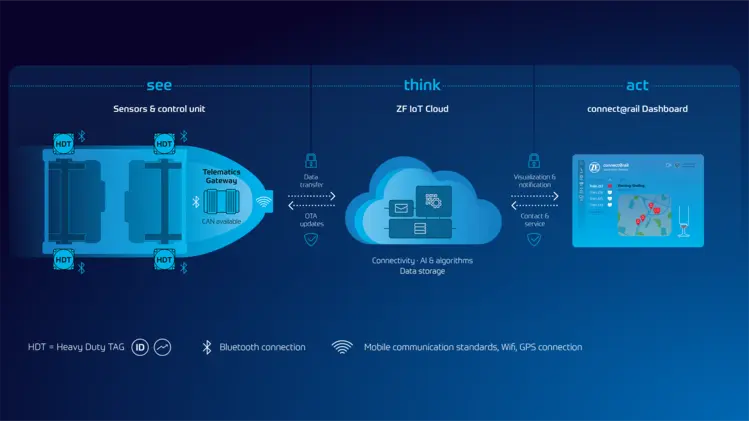
Infrastructure and Driveline Monitoring system overview
Additional information
Press release: Track Damage Detected Precisely: ZF Presents Track Monitoring for Digital Track Inspection
Press release: And Round it Goes: ZF Expands connect@rail to Include Monitoring Feature for Wheel-tread Wear