Digital Twins

Simulate physical tests virtually

What is a Digital Twin?

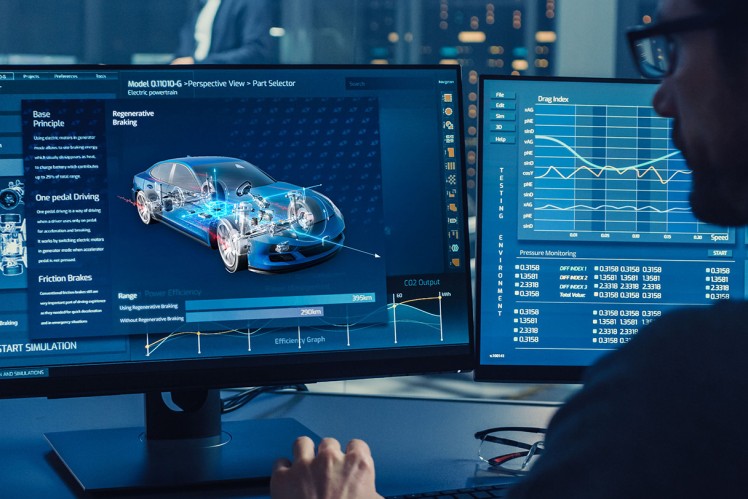
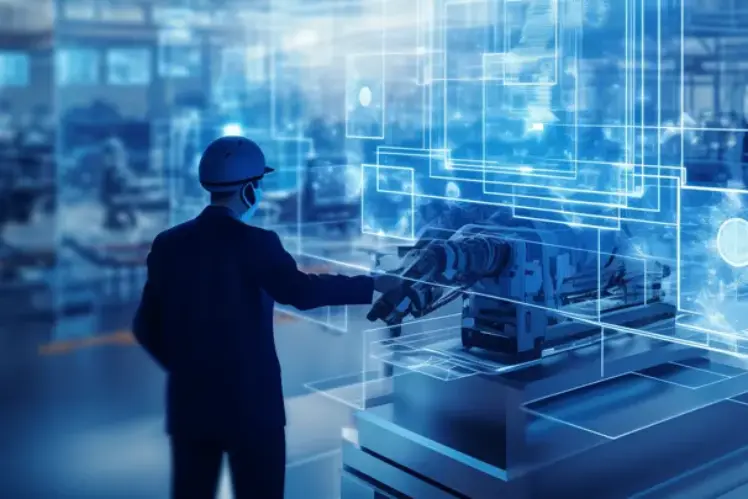
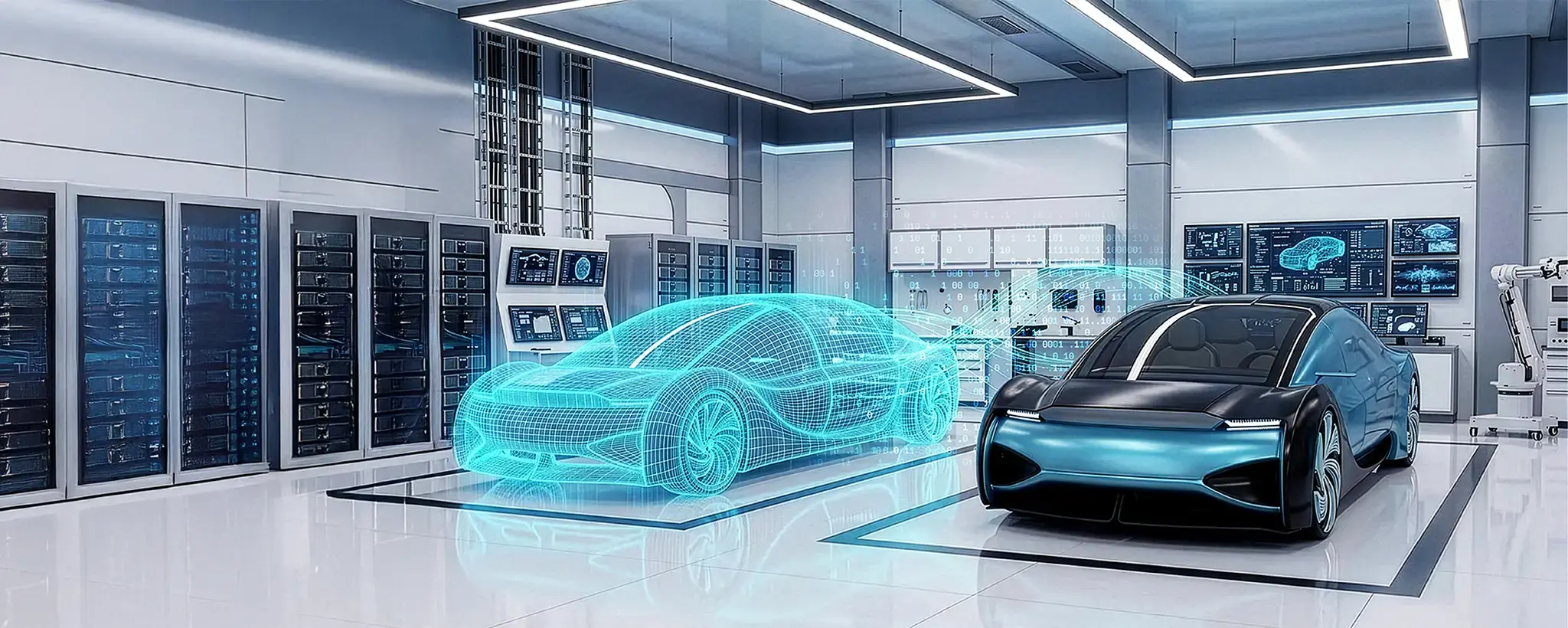
A digital twin is a virtual image of a real object, system or process. It accompanies a product throughout its entire life cycle – from the initial idea through development and production to use, maintenance and finally recycling. This digital representation makes it possible to simulate, analyze and optimize real processes in a virtual environment. In addition, it can be used to optimize collaboration and develop new business models. Digital twins for products also provide greater transparency, traceability, and efficiency.

Why are Digital Twins so Important?

Digital twins are revolutionizing the way products are developed, manufactured and operated. They offer numerous advantages:

Where Does ZF Use the Digital Twin?

ZF uses digital twins along the entire product life cycle - from the development of new functions and assistance systems to the optimization of production lines. Sustainability goals are also supported, for example by reducing energy consumption and waste volumes.

Digital twins do not completely replace physical tests, they complement them. Their informative value depends heavily on the quality of the input data and calibration with real scenarios. ZF relies on consistent data models, precise measurements and strict validation processes to ensure reliable results.

A look into the future shows that artificial intelligence and machine learning are increasingly being integrated to enable even more precise predictions. In addition, networking with platforms such as Catena-X is being driven forward in order to achieve end-to-end data integration along the entire automotive value chain.

“Our engineers are increasingly integrating AI and machine learning into digital twins to achieve even more accurate predictions.”
Dr. Rolf Reinema, Vice President IT Infrastructure & Operations, IT Security, Production IT, Engineering IT, Quality IT

Versatile Digital Doppelgänger

Dr. Rolf Reinema, responsible at ZF for the IT infrastructure and IT in engineering and production, explains the "digital twin" process for the automotive industry of tomorrow.

How are Digital Twins Changing Processes in Development and Testing?

Digital twins can shorten development times, reduce costs and increase product quality. They also increase efficiency and thus competitiveness.
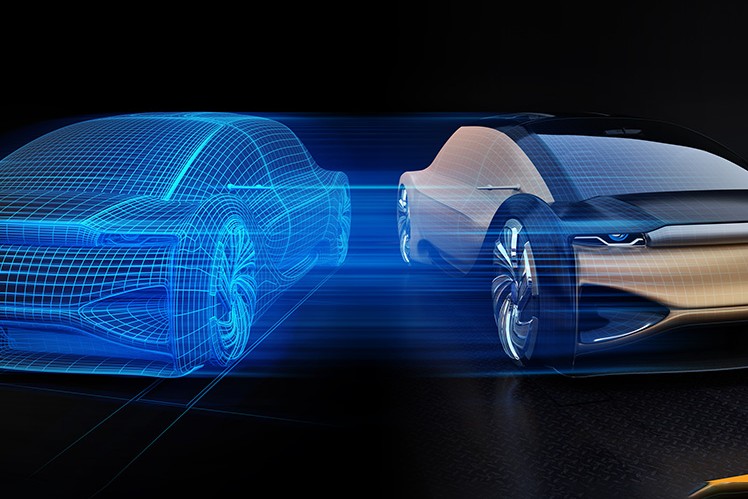
"For us, any prototype construction stage that is not produced means that all subsequent steps associated with it are virtualized – a gigantic step forward."
Dr. Gunther Wehr, Head of Competence Center Digital Twin

Successful Virtual Sprint

Greater competition and shorter development times strongly impact the testing of new components and systems. Developers at ZF are increasingly reacting by using digital twins, which offer even more advantages.

What are the Advantages of Digital Twins in Production?

In the digital age, the planning of a production plant takes place virtually. A digital twin of the planned system not only contains the dimensions of the individual components, but also their performance data, behavior, interfaces and much more. It also provides data that enables precise predictions to be made as to the effect of a change at a different location, for example.
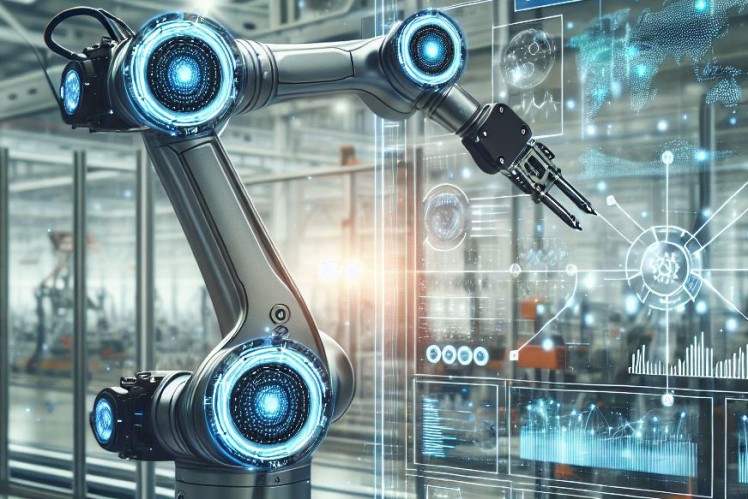
"One of the key strengths of the digital twin in production is its ability to simulate the impact of changes in one part of the system on the entire production line. This saves a lot of time and enhances safety."
Rüdiger Ammann, Head of System House Industry 4.0

Virtual Journey Into Reality

Virtual development is inextricably linked to mobility’s transformation. Greater digitization of this critical process step is essential for suppliers like ZF to consistently meet customer expectations for speed and quality. Here’s an overview.

Modern Production: Digital Twin, Real Advantages

Long before a production line is built, a digital twin ensures its smooth operation later in the factory hall. Just one of many advantages of digitalized production driven forward by ZF.

Digital Manufacturing Platform

To make processes in the plants faster, more transparent and more uniform, ZF has developed the “Digital Manufacturing Platform” (DMP).

ZF DOS

The ZF Dataspace Operating System is a cloud-based or self-hosted platform that enables enterprises to manage data spaces such as Catena-X and Mobility Data Space.

Digital Twin: The Future Inside the Computer

FutureStarter Deevakar Kuppuswamy is impressed by the speed with which ZF is implementing Next Generation Mobility. Together with his team, he is reducing the development times of new transmissions or electric motors by up to half thanks to simulations, virtual approvals and digital twins.