Modern Production: Digital Twin, Real Advantages
Long before a production line is built, a digital twin ensures its smooth operation later in the factory hall. Just one of many advantages of digitalized production driven forward by ZF.
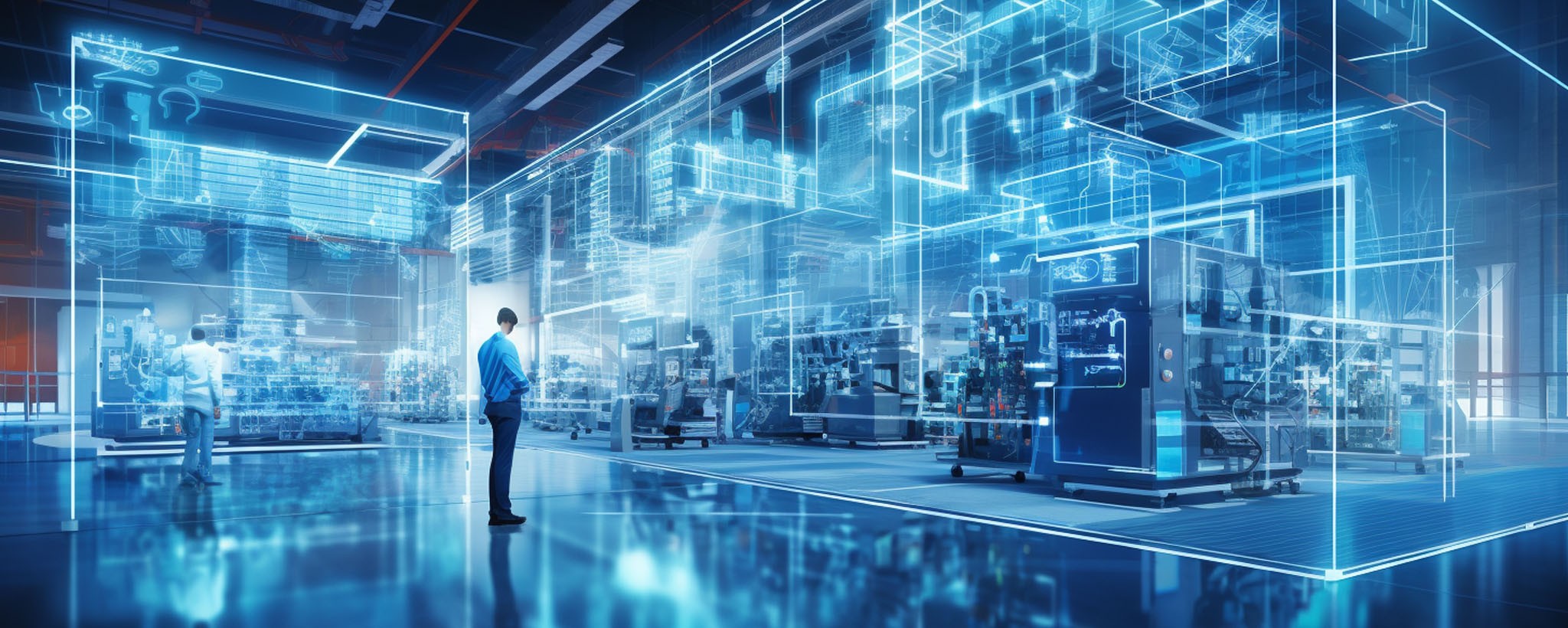
Imagine being able to fully design a new production line and optimize every process – long before the massive components of the manufacturing system are even anchored to their concrete foundations on the factory floor. Thanks to the digital twin, it’s already a reality. Digital twins boost both efficiency and speed, not only during development and testing, but also in full-scale production. Just a decade ago, engineers had around two years to take a product to series production. Today, that window has narrowed to just a few months. The entire production process must therefore be established just as quickly and reliably. Added to this is immense cost pressure from the competition. To stay competitive today and tomorrow, companies need to maximize their production efficiency. The digital twin technology can help.
Accelerated Progress Through Virtual Planning
For decades, production lines were developed on the drawing board – supported since the 1980s by the widespread adoption of computer-aided design (CAD). It is therefore only logical that, in our digital age, the planning of a production line – including its material flow, all machines, workstations and manual processing steps – is carried out entirely virtually. The digital twin of the planned system includes far more than just the dimensions of individual components. It also captures performance data, behavior, interfaces and much more. This makes it possible to precisely calculate and optimize space requirements, while also allowing factory planners to simulate and validate the functionality of each component and its interaction with the entire system, virtually and in advance.
"One of the key strengths of the digital twin in production is its ability to simulate the impact of changes in one part of the system on the entire production line. This saves a lot of time and enhances safety," explains Rüdiger Ammann. He adds, "We’re not dependent on real-time data, which physical systems can naturally only deliver at a much later stage." Ammann is responsible for ZF's strategic direction in the use of digital twins in production. In collaboration with IT colleagues, he and his team are developing company-wide standards and solutions to manage the entire lifecycle of production processes. The sooner a digital twin is in place, the sooner procurement and physical production setup can begin. According to Ammann, the use of digital twins can cut planning time by as much as 30 percent compared to traditional planning methods.
Digital twins do more than just accelerate the launch of new production lines and minimize the risk of disruptions. They also greatly simplify the planning of complex facility layouts. In the end, computers can simulate a wide range of interdependencies and explore endless configuration options. This reduces the risk of downtime in real-world operations and boosts overall plant efficiency.
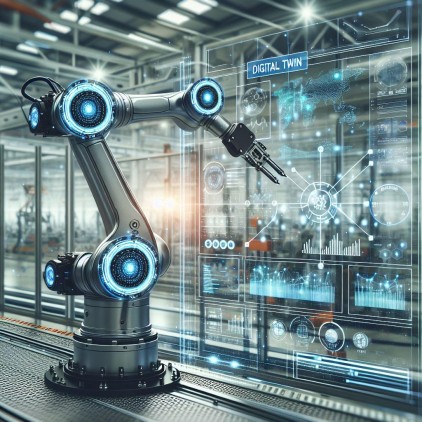
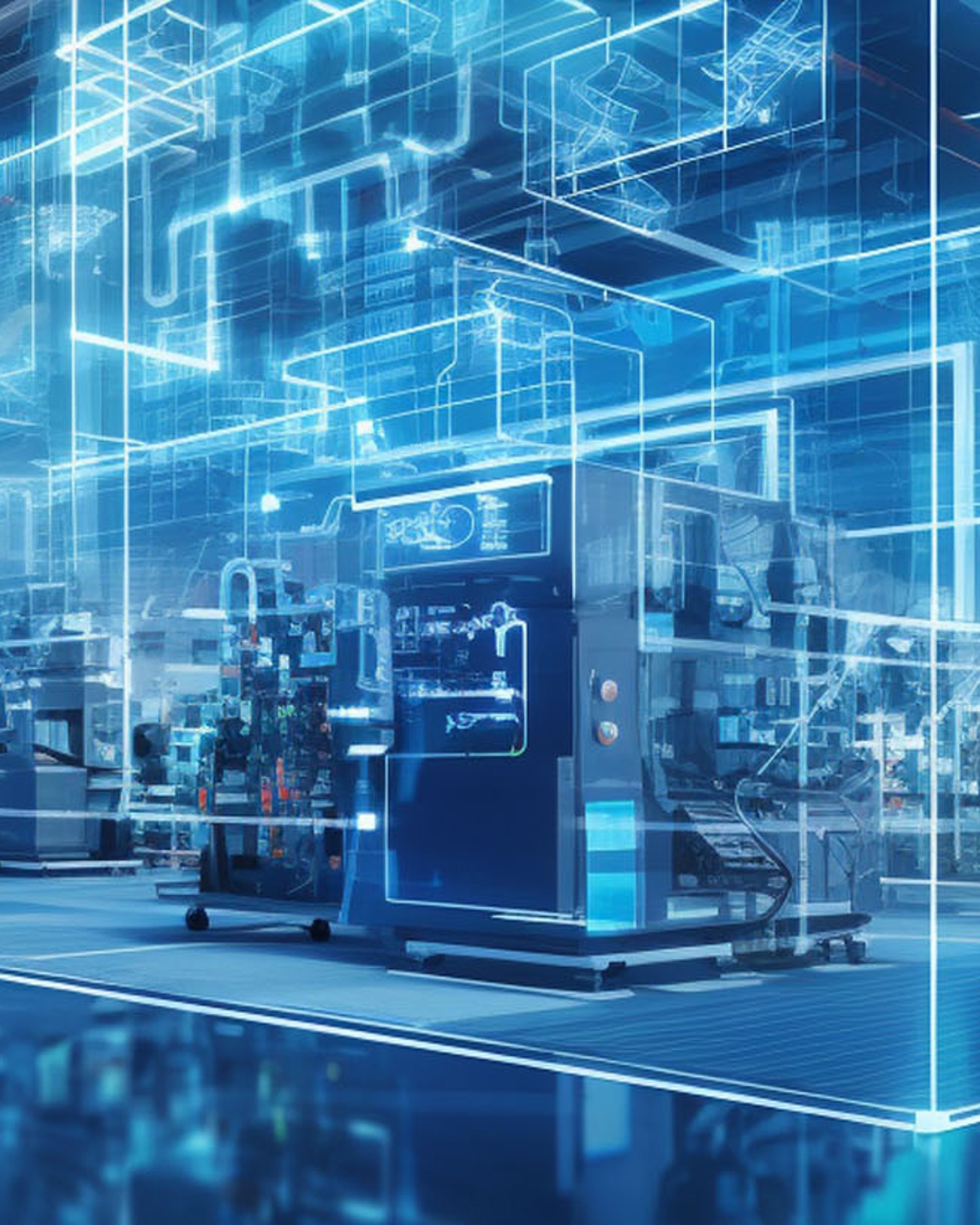
During the planning phase, the digital twin provides the data for the use of the real robot.
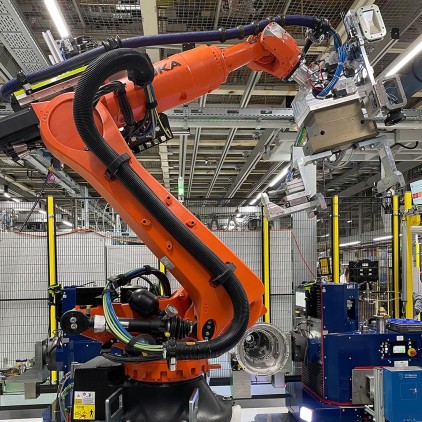
The latter, in turn, constantly sends data to its digital twin for further production optimization during operation.
When every process in a system is digitally replicated, the digital twin makes it possible to accurately predict how a change in one area will affect the entire operation. "When it comes to complex production lines – like our 8-speed automatic transmission with up to 90 stations – planning the layout and design, including workstations, is nearly unmanageable without the support of a digital twin," explains Ammann. "With the virtual model, we can easily make changes and observe their effects – long before a single bolt is turned on the actual machine." This saves a great deal of time, especially when we need to ramp up production quickly to meet a sudden surge in demand.
Valuable Insights Drawn Directly From the Real Machine
Once a system is up and running, its components feed a wealth of data into the digital twin. These data can be used to forecast performance, form the basis for predictive machine maintenance and help improve product quality. Even quality control at the end of the production process becomes easier with digital support: Key quality features are checked by employees using their cell phones, comparing the digital model with the physical product. A dedicated software tool supports the comparison between target and actual values, making it easier to monitor product quality based on defined parameters.
Modern production processes are so complex and widely used across the Group, so it will still take some time before ZF has fully virtualized them. "All the data from design, machines and production processes come together like pieces of a puzzle – forming one comprehensive digital twin. Depending on the user, the digital twin presents different perspectives on the real-world object," says Ammann. The complete transparency achieved in this way unlocks a wide range of new possibilities. This can help generate reliable forecasts – not only for products, processes and systems, but also for achievable production volumes.
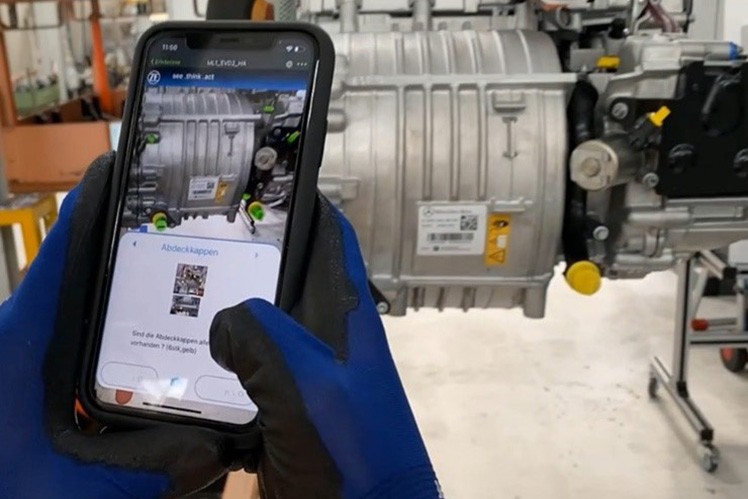
Smartphone cameras and augmented reality technology support employees in monitoring product quality.
This, in turn, provides valuable insights for internal production planning, as well as for customers and suppliers. To drive end-to-end digitalization across the entire value chain, ZF teams are systematically working to transform numerous processes and data streams through a series of use-case-based digitalization initiatives. Only by doing so can the company keep pace with the rapid transformation of the automotive industry and continue to create added value for customers and partners.