Successful Virtual Sprint
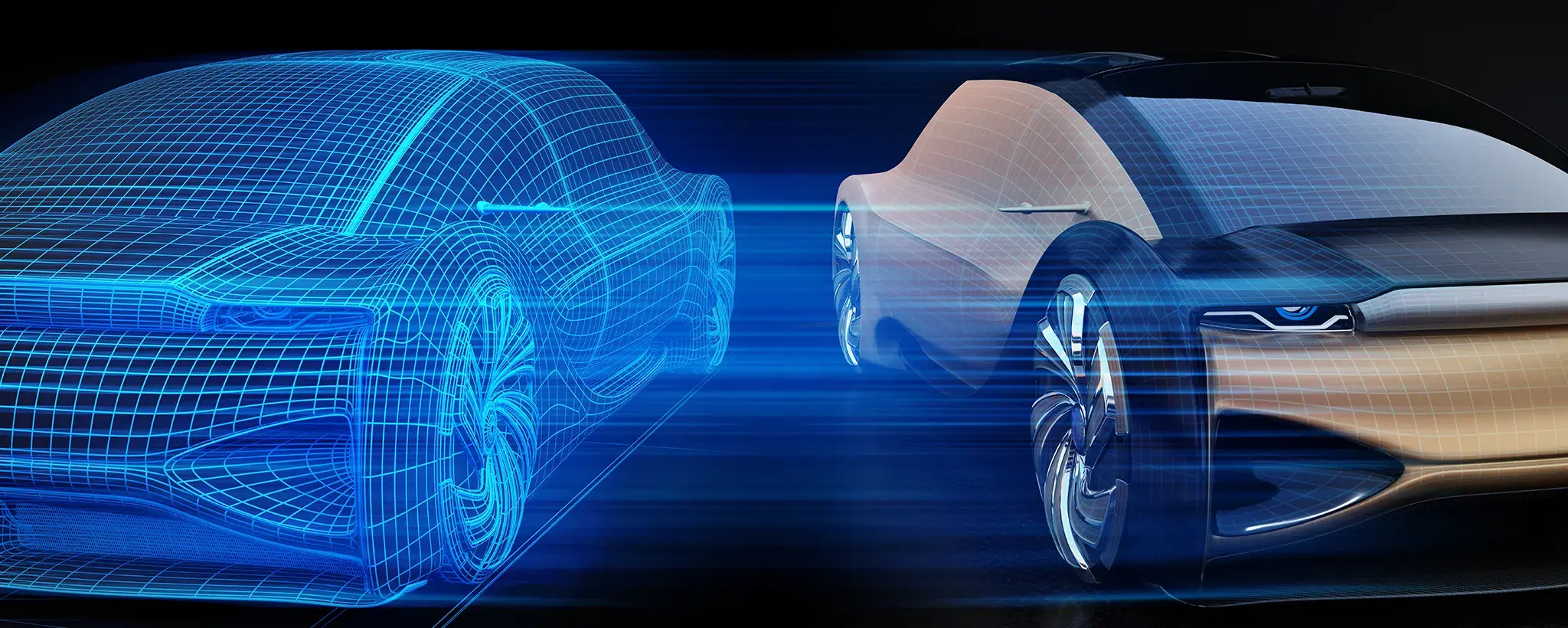
Greater competition and shorter development times strongly impact the testing of new components and systems. Developers at ZF are increasingly reacting by using digital twins, which offer even more advantages.
We are living in fast-moving times. This is not only a subjective feeling – there is plenty of evidence for the increase in speed. Digitalization is definitely one of the drivers as it continues to infuse society and the economy. What we know as digital twins, for instance, has an almost dramatic influence on the processes in technology companies such as ZF. In our first publication you learned interesting facts about how digital twins are used in companies. Let's now take a closer look at how development and testing are changing as a result of this digitalization offensive. Among other things, digital twins can shorten development times, reduce costs and enhance product quality. This increases efficiency and competitiveness.
Experts are therefore expecting a positive outcome from the distribution and revenue growth of these digital tools. According to the Irish market research company "Research and Markets," the global market for digital twins will grow by about $163 billion from 2024 to 2029, accelerating at an average annual growth rate of nearly 65 percent during this period.
More Speed in Testing
Dr. Gunther Wehr is someone who is well aware of the importance of such solutions. He heads the Center of Competence (CoC) "Digital Twin" at ZF. Together with the divisions of the Group, this central department has the core task of virtualizing product testing. Currently, ZF spends a high double-digit percentage of its R&D budget on product validation. The more successful the company is in reducing the number of prototype development stages and instead obtaining test data from a digital twin, the more money it saves. Time savings are just as crucial as cost savings. "We used to complete tasks in 24 months. Now we are expected to finish them in 18 months. What we did in 18 months should now be reduced to 12 months," says Wehr, describing what the customers demand from ZF developers. This can only be achieved through increasing virtualization.
It suits ZF particularly well, because many ZF products are mechatronic systems, such as chassis and powertrains for passenger cars as well as commercial vehicles or off-highway applications. Simply put, there is a cable attached to all these systems, so they have a control unit. Best prerequisites for digitalizing the testing of software and hardware more than before. "For us, any prototype construction stage that is not produced means that we don't have to order it, a supplier doesn't have to manufacture it, we don't have to log it, and it doesn't have to be put on a test bench for testing. This whole chain has been virtualized – a gigantic step forward," explains Wehr.
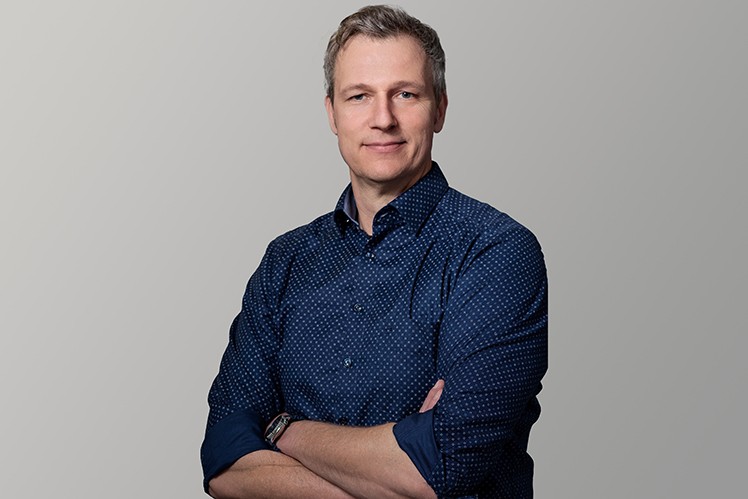
Dr. Gunther Wehr, Head of Competence Center Digital Twin
For about two and a half years, ZF's development teams have been working intensively to establish the digital twin in an increasing number of product groups. They explain to customers how ZF changes testing in individual cases and the benefits customers can gain from it. The purpose of the digital twin is not to eliminate the long-standing practice of physical testing, but rather to reduce it to a necessary minimum.
Simulating Physical Tests Digitally
The topics that a digital twin must cover in the testing of mechatronic systems include durability – no cracks, no fractures – as well as acoustics (noise, vibration, harshness), electromagnetic compatibility and efficiency. Software and system tests can also be virtualized. All virtual tests are statistically validated. To achieve this, data from the test bench trials are compared with data from the simulation chain. The more often this comparison is made, the higher the so-called confidence interval, meaning the results obtained with the digital twin become more reliable.
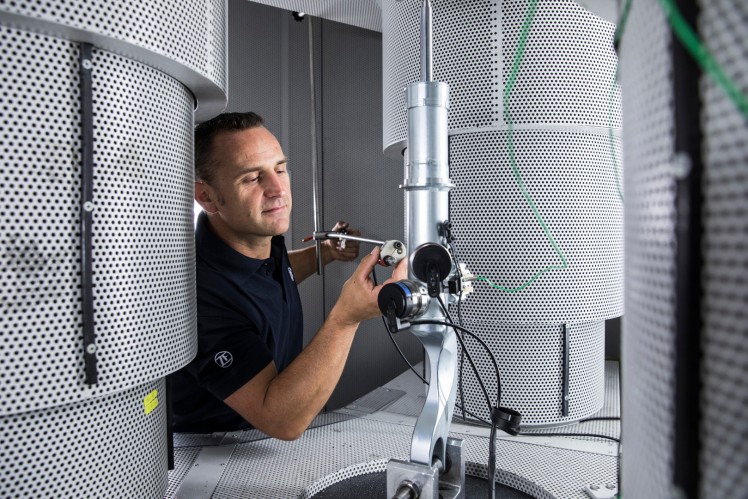
Digital twins cannot completely replace physical tests on test benches, but they can reduce their number. Here the testing of a shock absorber.
Digital Testing on the Rise at ZF
Even though ZF is not yet using the digital twins across the board, there is already a growing amount of experience with them. In consultation with a German vehicle manufacturer, for instance, ZF conducted virtualized climate and environmental tests (HTOE tests) for power electronics. This partially eliminated the usual high-temperature tests in special test cabinets. Without compromising the validity of the data, virtualization reduced the testing time by about a year – the planned start of series production for the customer could be maintained.
For a US car manufacturer, ZF implemented prototype-free development during the design phase for adaptive (active) dampers. In this case, it was possible. "We have a lot of experience with dampers," says Wehr, adding: "If the changes in software from one generation to the next are only minor, it is possible to dispense with prototypes." This results in significant savings in both cost and time. For this project, ZF provided the virtual performance certificates to the customer as agreed, and the customer was satisfied with them.
One field where virtual testing has become indispensable is "steer-by-wire." The fact that steer-by-wire is highly complex makes it ideal for virtual testing. "The tests we run here are so complex and so time-consuming that we are talking about weeks or months just to validate a software version," explains Wehr, highlighting the scope of testing for this product. New software code is created every day and needs to be tested. With traditional hardware testing on a HiL test bench (Hardware in the Loop), the requirements can hardly be met. This is why virtual testing is so important. The HiL test bench with the control unit and the microcontroller as well as the hardware (actuators) around it receive a virtual replacement. What happened there also happens reliably in digital form during virtual testing. This is a novelty for the technology company, which is in the process of transferring the digital testing process to other product groups.