The Future Drives with Software

How the software-defined car is transforming the automotive world.

What is a Software-defined Vehicle (SDV)?

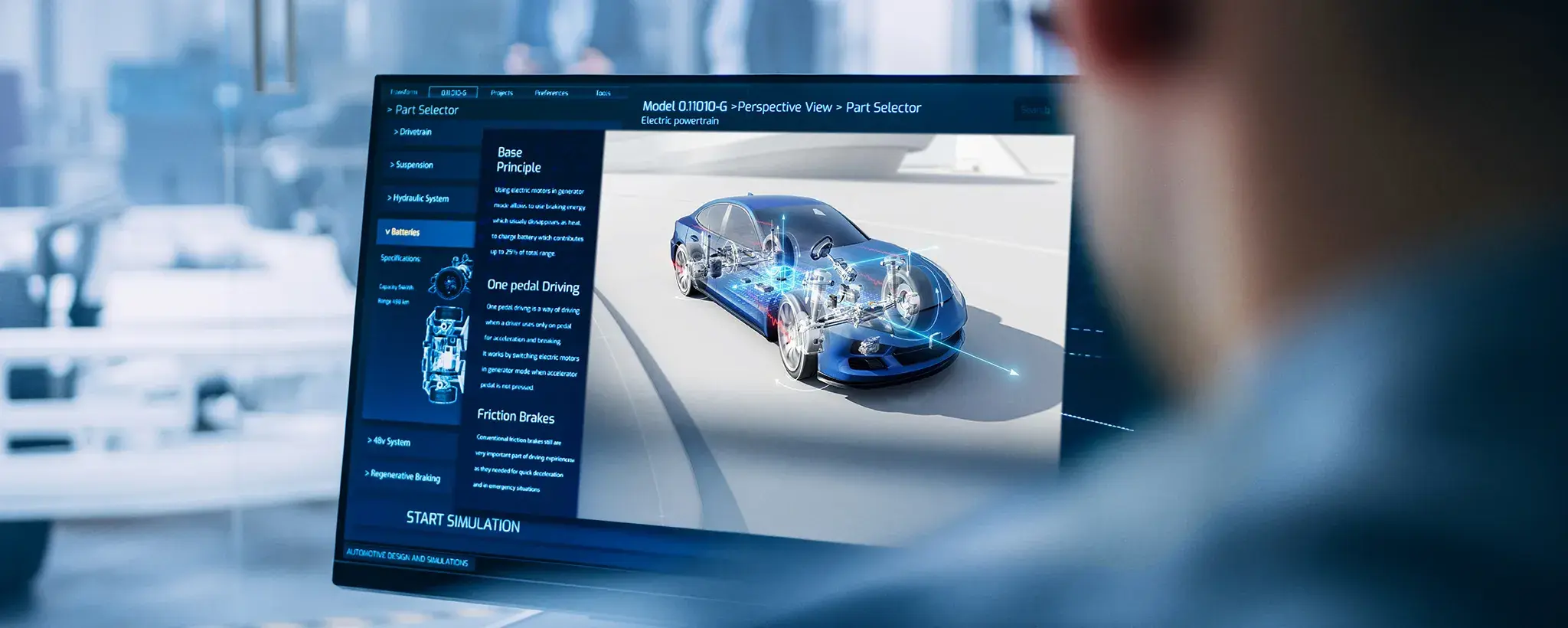
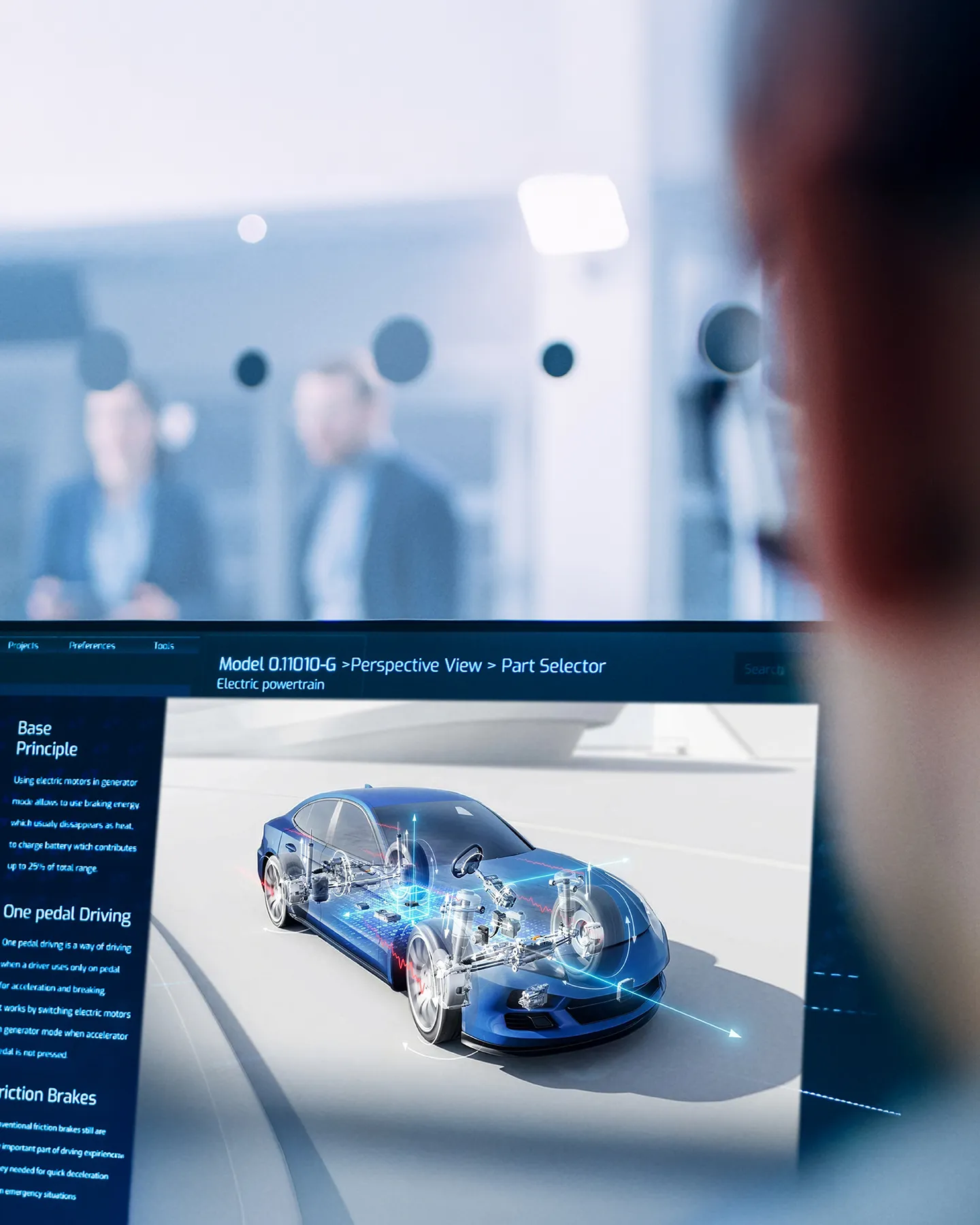
The automotive industry is undergoing a fundamental transformation: vehicles are evolving from hardware-centric machines to software-driven, intelligent systems. This marks the beginning of a new era in which software not only complements functions but takes on the central role in vehicle architecture.
A Software-defined Vehicle (SDV) is characterized by the fact that its functions are largely defined and updatable through software. The separation of hardware and software enables flexible further development of these functions throughout the entire lifecycle. Over-the-air updates, modular software platforms, and a service-oriented architecture are key elements in this context. Moreover, this transformation changes how vehicles are developed and operated. Software becomes the driver of innovation, enabling new business models, strengthening customer loyalty, and advancing integration into digital ecosystems.

Lines of Code
150
million
lines of software code contains a premium-class vehicle today – more than ten times as many as it did ten years ago.

Smart Solutions for Tomorrow’s Vehicle

ZF is driving the development of the Software-defined Vehicle (SDV) with a comprehensive portfolio.

ZF ProAI
Middleware
Intelligent Cameras
By-Wire
Open Source
cubiX
Smart Chassis
Powertrain
ZF ProAI

ZF ProAI

The ProAI family from ZF is an automotive-grade central computer suitable for all vehicle platforms, software applications, and E/E-architectures – from low-cost entry-level models for pure front camera solutions or parking-only applications to powerful comfort configurations for Level 2+ and Level 3 ADAS and chassis solutions in the premium segment, right through to all-in-one supercomputers that control entire autonomous applications. 

ProAI Supercomputer
Middleware

Middleware

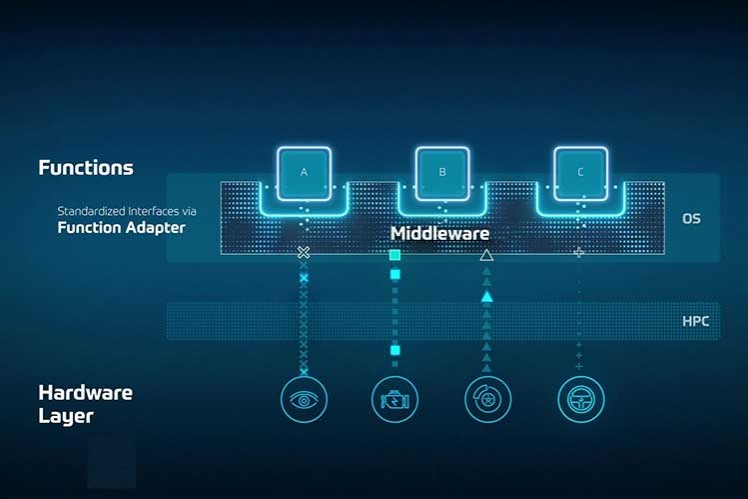
As a kind of mediator, ZF middleware enables efficient communication between software functions and hardware components. It is independent and compatible, making vehicle platforms future-proof.

ZF Middleware
Intelligent Cameras

Intelligent Cameras

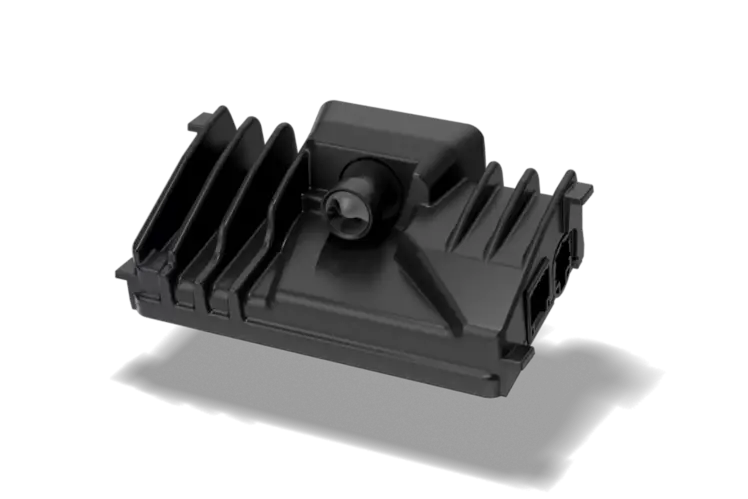
ZF is the worldwide leader in automotive smart cameras for ADAS functions. The newest generation of its front camera – Smart Camera 6 – features a 120-degree field of view with more than 4x higher image resolution (8 megapixels) than the previous generation and greater processing power. With the capability for over-the-air updates, Smart Camera 6 enhances performance and enables new functions to allow for future system upgrades.

Smart Camera 4.8
Open Source

Open Source

Software is extremely important for value creation in the automotive industry. Functions that are updated “over the air” are now just as much a part of the automotive market as mechanical components. That is why open source software is also playing an increasingly important role. It offers major advantages in the collaborative interaction within the automotive industry.

cubiX

cubiX

The control software cubiX networks and coordinates the active and semi-active actuators using a control algorithm. The scalable system is modular in design, allowing it to be individually adapted to the requirements of each automotive manufacturer. By optimally networking the individual actuators, new functions are created that not only enhance comfort but also improve the vehicle’s dynamics and safety.

Smart Chassis

Smart Chassis

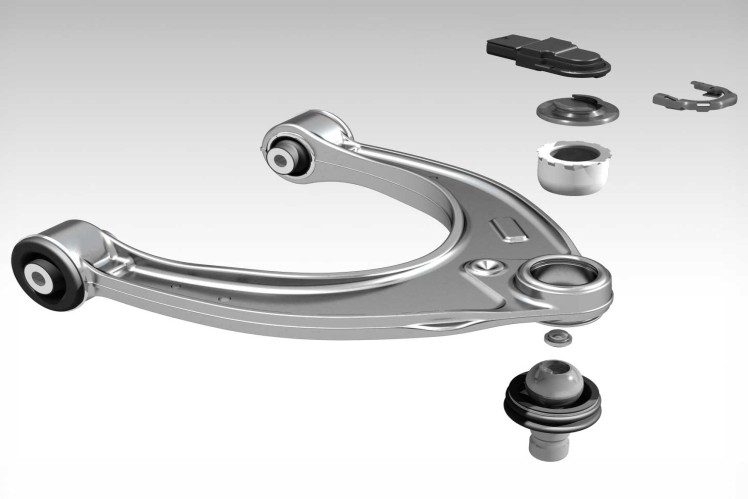
ZF offers a comprehensive portfolio of intelligent chassis components for modern vehicle architectures: from axles, steering systems, and brakes to innovative damping systems and smart suspension sensors.

Image of a suspension control arm with associated components, including bushings, ball joint, and mounting parts. The parts are shown in an exploded view.
Powertrain

Powertrain

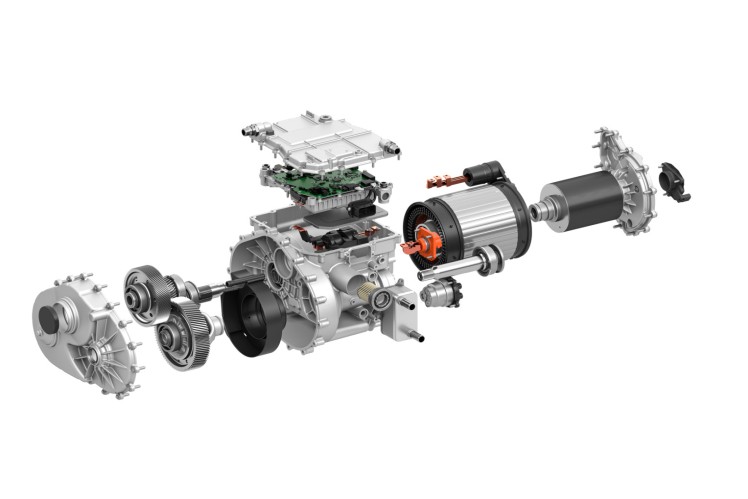
Software-defined vehicles are the future of electric mobility—safe, efficient, connected, and ready for tomorrow. At their core, intelligent software transforms the drivetrain into a smart, adaptive system. It’s the brain behind ZF’s e-motors, precisely managing torque, speed, energy flow, and thermal conditions. It guarantees safety and cybersecurity while enabling seamless connectivity through advanced interfaces and over-the-air updates. With an agnostic framework, it integrates hybrid and fully electric platforms for ultimate flexibility.

Exploded view of an electric axle drive showing components such as electric motor, power electronics, gearbox, and housing parts.

Intelligent Control Systems and Driving Dynamics Functions

ZF is actively and strategically shaping the transition to the Software-defined Vehicle by developing a standardized, modular software architecture for the chassis and integrating intelligent control systems such as cubiX, which are already in series production and enable harmonious coordination of driving dynamics functions. With data-driven services and innovative technologies like Steer-by-Wire and Brake-by-Wire, ZF is driving the digitalization and connectivity of modern vehicles forward. New hardware platforms such as ProConnect ensure that diagnostics and updates run smoothly and over-the-air, enabling future-proof and efficient vehicle development.

“With our Chassis 2.0 approach, we are precisely meeting today's market requirements. We are set to establish market- and technology-leading positions across all key segments of our Chassis 2.0 portfolio.”
Dr. Peter Holdmann, Member of the Board of Management and Head of the Chassis Solutions Division, ZF Group

The Chassis as the Enabler of Software-defined Vehicles

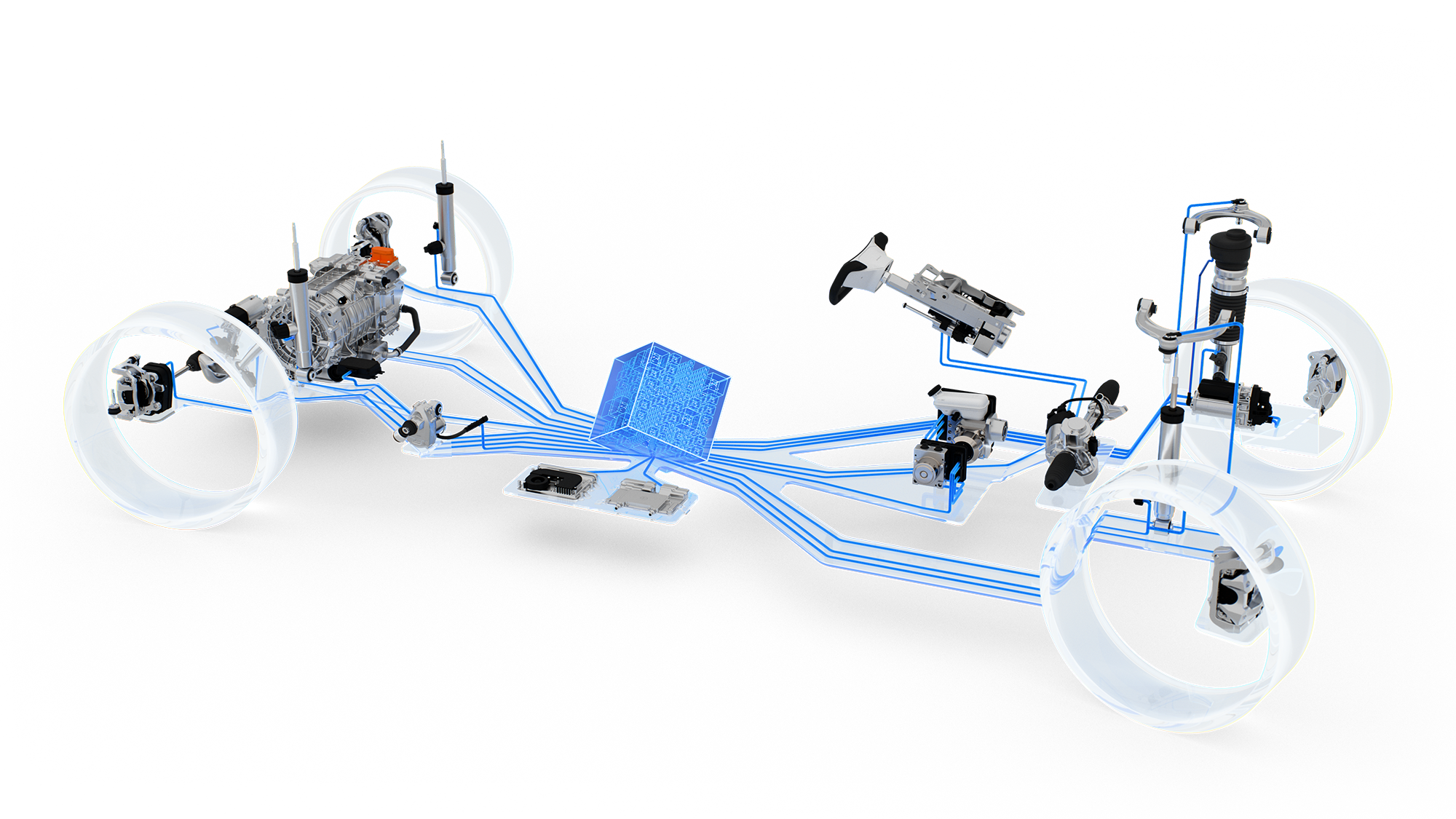
The core of future vehicle architectures are high-performance domain or zone controllers on which the central software runs. Just as the brain is connected to every part of the body, the car’s central computers interact with all sensors and actuators to enable an unparalleled mobility experience in automated driving, electric mobility, vehicle motion control and integrated safety functions. Various vehicle types can then be integrated into this "mobile chassis platform" consisting of high-performance controllers, Continuous Damping Control, brake systems, steering systems and an electric drive.

cubiX Unleashes the Potential of the Chassis

A control platform for everything the chassis can do – that’s cubiX®. ZF’s software product is already active in initial production vehicles. Several functions demonstrate the solution’s potential, which automakers can further leverage.

Chassis 2.0 – ZF’s Solution for the Software-defined Vehicle

The three megatrends of electrification, software-defined vehicles and autonomous driving are creating new opportunities and challenges. In the future, the chassis must be able to connect with its architecture and its environment. ZF’s answer is the Chassis 2.0 concept.

Perfection Behind the Scenes

Miriam Beck has experienced a paradigm shift during her 16 years with ZF. When she excels at her job, the end customer is completely unaware of her existence: Miriam Beck is working on the chassis of the future. The key ingredients are functional data and the collaboration of colleagues from other teams. The result: cubiX.

Narrow Roads, Heavy Traffic, and Smart Solutions

He knows the characteristics of mobility in India particularly well: Dhananjay Gaikwad frequently travels from the ZF Head Office in Pune to development centers of car manufacturers in Mumbai.

How Does the SDV Work?

The foundation of the SDV is formed by powerful central computers – so-called high-performance computers like ZF ProAI – and new, connected electronic architectures. These make it possible to develop complex software solutions that control and coordinate multiple systems simultaneously. Hardware components such as brakes, steering, or damping are digitally controlled, for example via ZF’s modern steer-by wire systems.

ZF ProAI: The Source of Vehicle Intelligence

The intelligence of vehicles will be controlled by a few powerful high-performance computers like ZF ProAI. It is the most flexible, scalable and powerful automotive-grade supercomputer on the market.

X-by-Wire: When the Electronics Take Sole Control

ZF has the largest portfolio of by-wire technologies in the industry. What are the advantages when the electronics control the brakes, steering and other systems in the car?

Mediator in Automotive Software

Middleware connects the operating system of modern vehicle computers with the applications running on them – independent of the hardware. It enables faster software updates, simplifies the integration of new functions, and reduces complexity in vehicle development. This ensures that the vehicle remains up-to-date and adaptable throughout its entire lifecycle.

Qorix: Middleware for Software-defined Vehicles

Qorix is a joint venture between ZF, KPIT Technologies, and Qualcomm Ventures. The company develops scalable middleware solutions for Software-defined Vehicles (SDVs). Qorix technology supports automotive manufacturers and suppliers in efficiently integrating and securely operating complex software architectures.

Competence Center for Open Source

Open-source software plays a central role as it fosters collaboration and accelerates innovation in the automotive industry.

The Open Source Program Office (OSPO) ensures a professional approach to open source across the entire organization. It defines clear guidelines, guarantees compliance, and supports development teams in the secure integration of open-source components. In doing so, OSPO creates the foundation for efficient software development and strengthens ZF as a technology partner in the software-defined vehicle.

With Open Source Software to the Car of the Future

Open source software offers significant advantages in the collaborative interaction within the automotive industry. The Open Source Program Office (OSPO) ensures its optimal use and professional handling throughout the ZF Group.

Accelerating the Path to Software-defined Vehicles with Open Source

Developing automotive software faster is an important goal in the automotive industry. Open source plays a central role in this.

“We Came to Stay”

ZF committed to an increased use of Open Source Software by publishing the “ZF Free and Open Source Software Manifesto”. Sarah Moser reflects on the impact of this milestone and gives an outlook.

Software Makes the Difference

Working as a software developer at one of the world’s largest automotive suppliers is diverse, exciting and always on the cutting edge. That’s what Manuela Sodinca, Cross Divisional Test Manager at ZF, reports.