
Technological Leadership
- ZF is a pioneer in brake-by-wire systems, with over 3 billion brake components produced globally
- The new portfolio supports automated driving up to Level 4, enhancing future mobility.

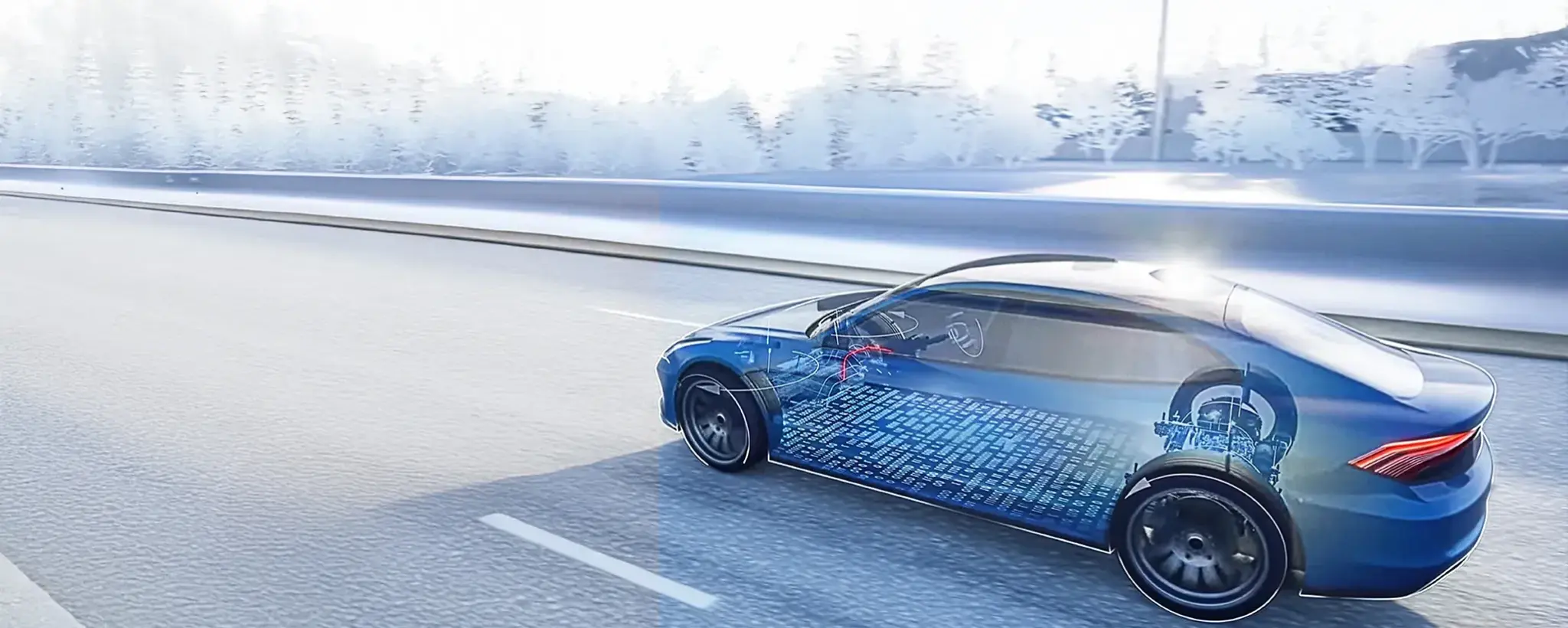
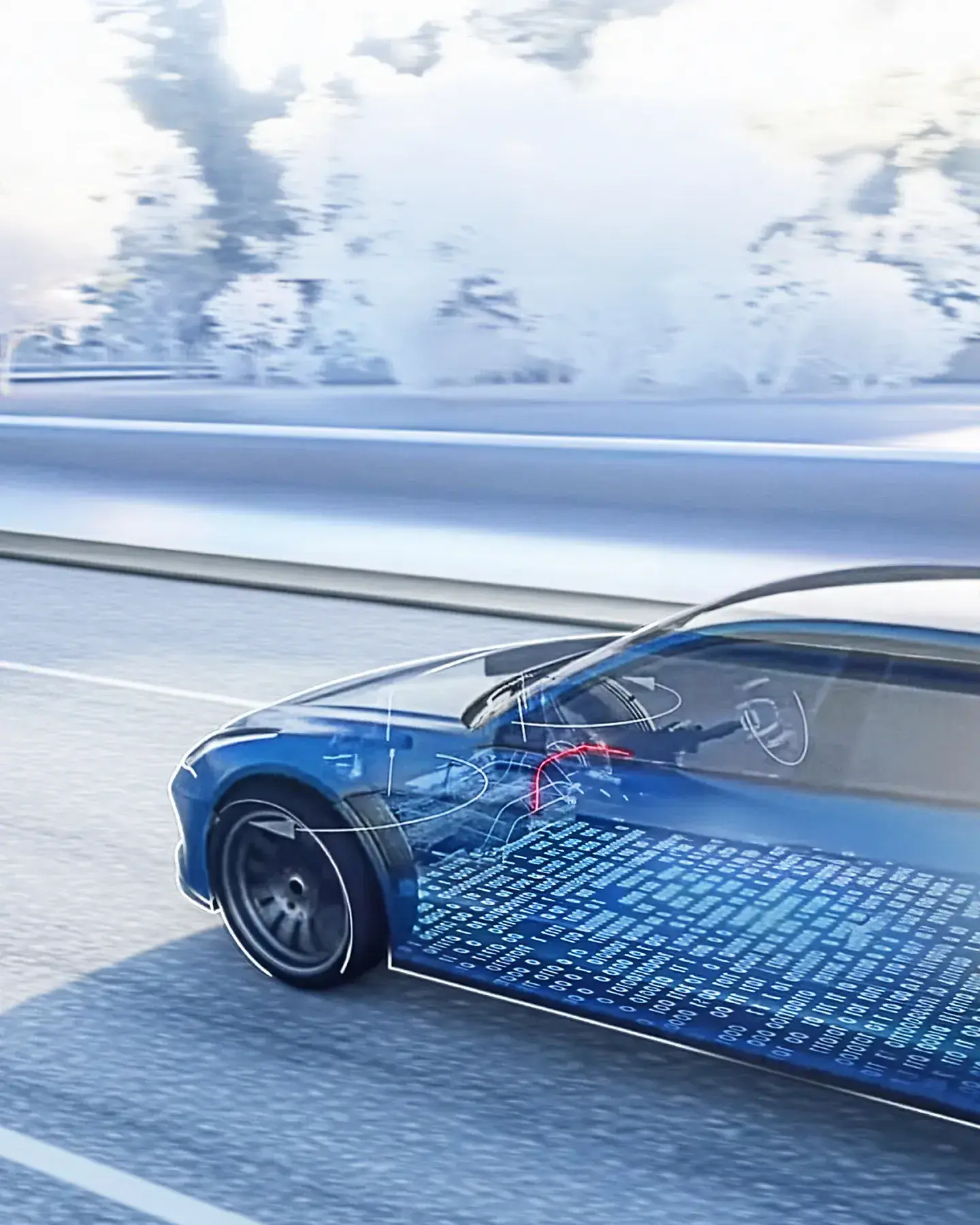
By-wire systems are foundational to modern vehicle architectures - especially in software-defined, electrified, and autonomous vehicles. They enable greater design flexibility, enhanced safety, and precise control, while also simplifying vehicle integration and reducing mechanical complexity.
Ideally, the vehicle should also brake on its own if necessary - for example, when a digital emergency brake system brings a vehicle to a standstill independently if the driver is not paying attention. However, today’s braking systems no longer consist solely of hoses, pumps and mechanics, but must also be software-controlled and electrically operated.
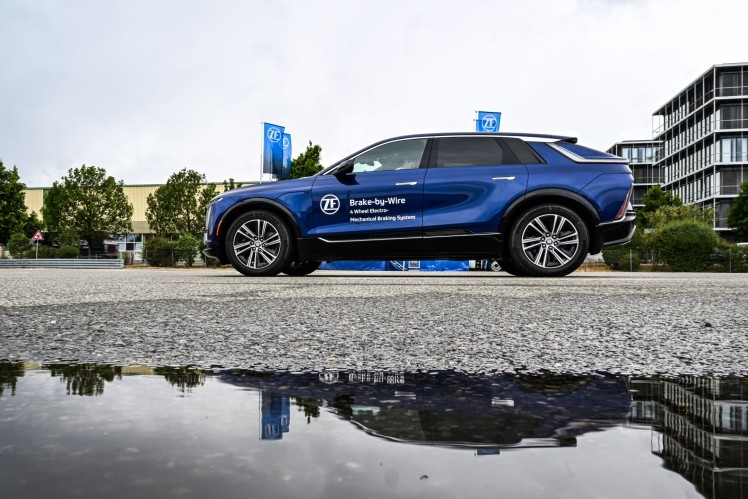
As the automotive industry accelerates toward electrification, automation, and software-defined vehicles, braking systems must evolve to meet new demands. ZF’s Brake-by-Wire systems are the key enabler for these transformations.
ZF’s Brake-by-Wire portfolio delivers the intelligent, adaptable, and future-ready solutions that modern mobility requires.
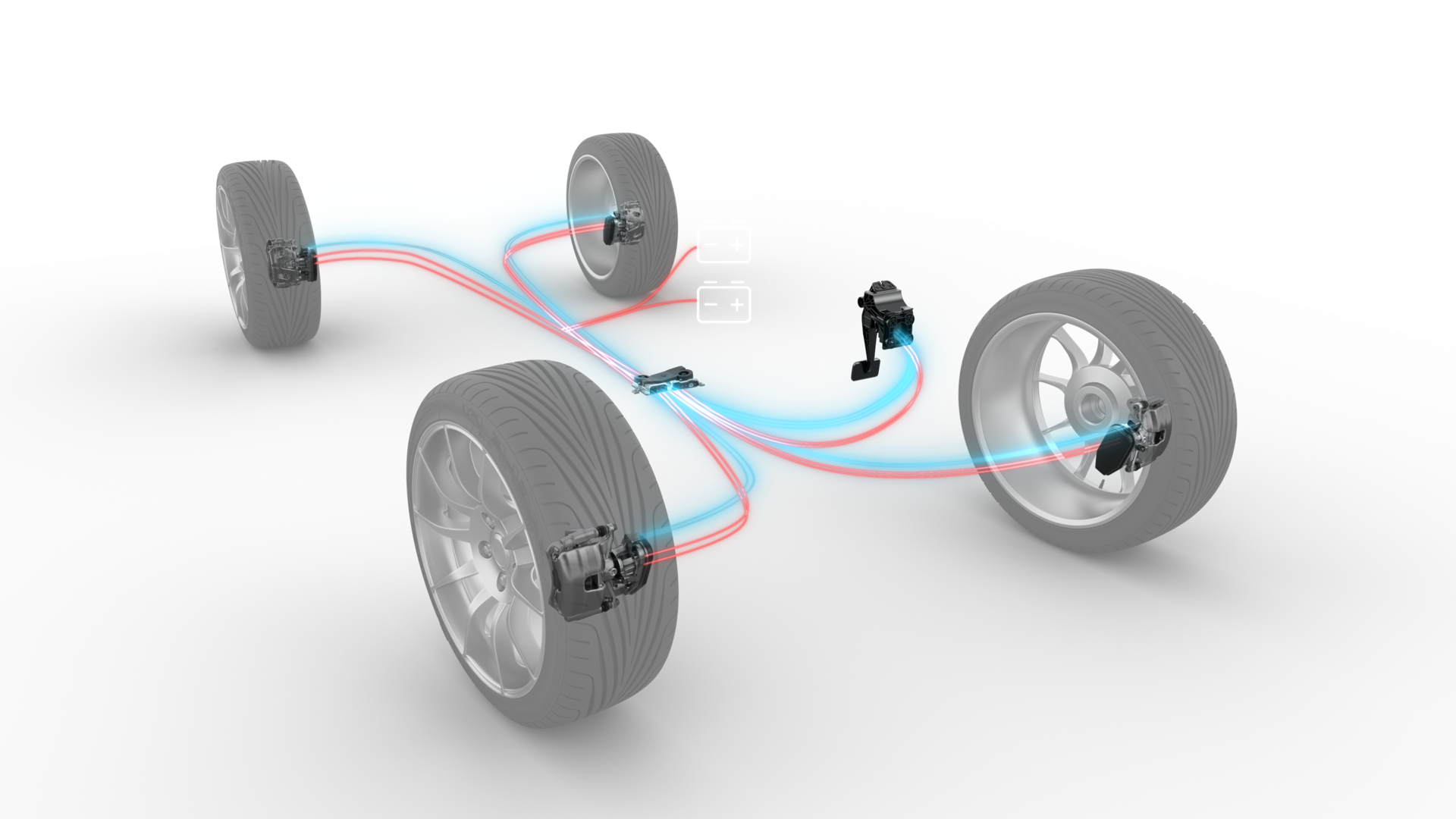
Brake-by-Wire (BbW) is more responsive and more economical.
Depending on customer requirements, braking solutions from ZF can be designed as either purely electric, purely hydraulic or a combined system - providing maximum flexibility.
Purely electronically controlled by-wire systems offer better vehicle control, shorter braking distances, more steering flexibility, greater driving stability at high speeds, and greater range and efficiency.
Steer-by-wire (SbW) technology is revolutionizing vehicle dynamics by replacing the traditional mechanical link between the steering wheel and the wheels with a fully electronic, software-defined connection. This shift enables unprecedented flexibility in steering behavior, cockpit design, and vehicle architecture - ushering in a new era of precision, safety, and automation.
Drivers can feel the difference immediately, and for manufacturers, the benefits are just as compelling. ZF's steer-by-wire technology delivers the bandwidth for a precise, comfortable and safe steering feel, with outstanding responsiveness and enhanced dynamics – enabling a wide range of functions that elevate comfort, safety and the overall driving experience. The cockpit and interior can be designed more freely, offering increased space and comfort for passengers.
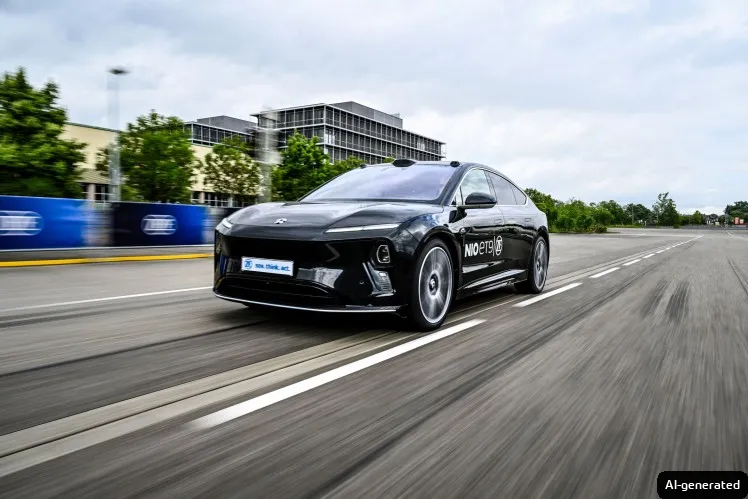
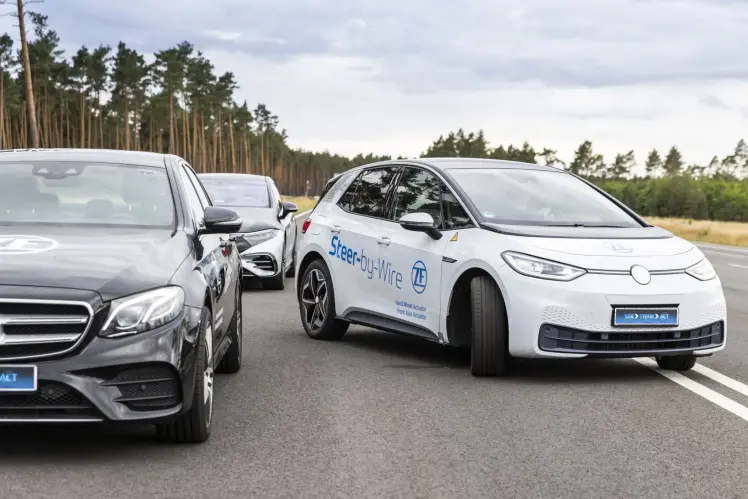
ZF is positioning itself at the forefront of developing production-ready steer-by-wire technology.
The technology also enables new steering wheel geometries, including foldable steering wheel rims. Without the need for an intermediate steering shaft, there is no longer a requirement to route components from the interior to the engine compartment. This streamlines both the assembly and positioning of steering components, while also making it easier to adapt platforms for different model series or markets, whether for right-hand or left-hand drive.
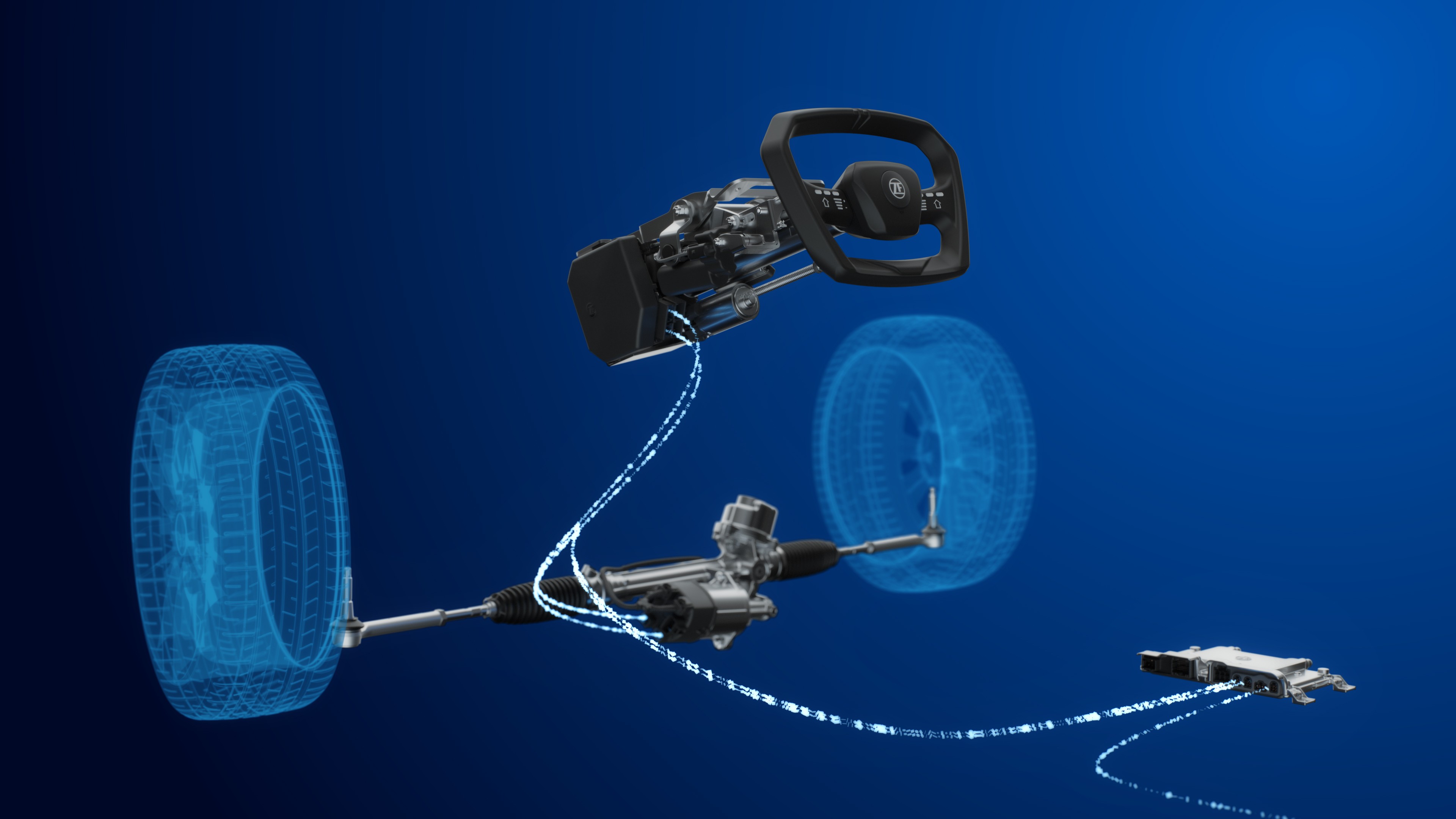
In a steer-by-wire system, the driver’s input is captured by sensors in the steering wheel actuator. This data is processed by an electronic control unit (ECU), which commands a mechatronic actuator between the wheels to adjust the steering angle. A torque feedback unit, such as ZF’s patented Twin Worm system, recreates the natural road feel.
A torque feedback unit – a small electric motor at the steering wheel – recreates the natural steering feel and road feedback. The ZF system, designed with redundancy for safety, dynamically adjusts the steering ratio to suit different driving speeds and conditions. This means the angle of the steering wheel is optimally translated into the wheel angle: A direct ratio for greater agility during parking, and a more indirect ratio for enhanced stability and comfort at higher speeds.
ZF’s Steer-by-Wire (SbW) technology delivers a new dimension of driving experience and vehicle design: