A Dynamic, Low-emission Path to the Future
As freight traffic on roads around the world continues to grow, the decarbonization of heavy-duty trucks is becoming increasingly important. With the TraXon 2 Hybrid, ZF is developing a driveline solution that reduces greenhouse gas emissions and supports vehicle manufacturers in meeting applicable emissions requirements.
It is an unimaginably large figure: 3.2 gigatons. This is the amount of direct carbon dioxide emissions generated annually by global freight transportation. According to the International Council on Clean Transportation (icct), these 3.2 billion metric tons of CO2 account for more than 40 percent of all transport-related carbon dioxide emissions. Road freight transport contributes a disproportionately large share of this total. As experts estimate that global demand for freight transportation will nearly double by 2050, it is crucial for climate protection to decarbonize commercial vehicles quickly and effectively. Long-haul trucks present a particular challenge if they are to operate with the lowest possible local emissions. After all, each of these vehicles covers extremely high annual mileages and has a gross vehicle weight of, in some cases, more than 40 tons.
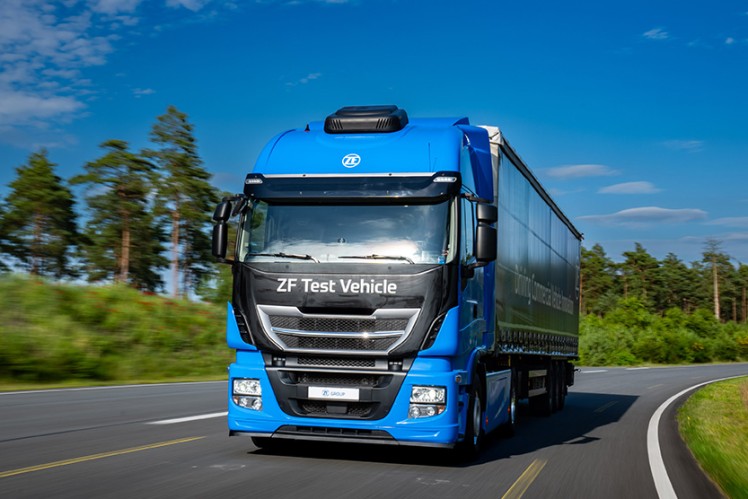
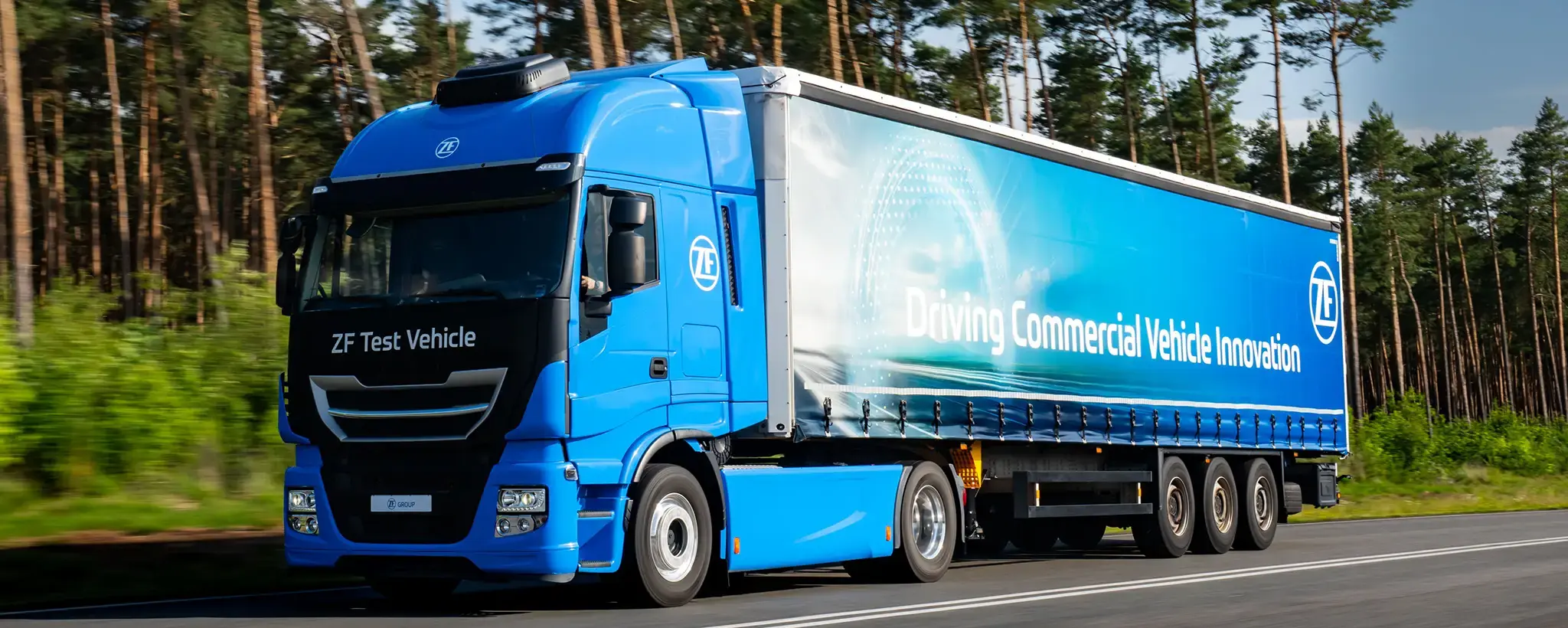
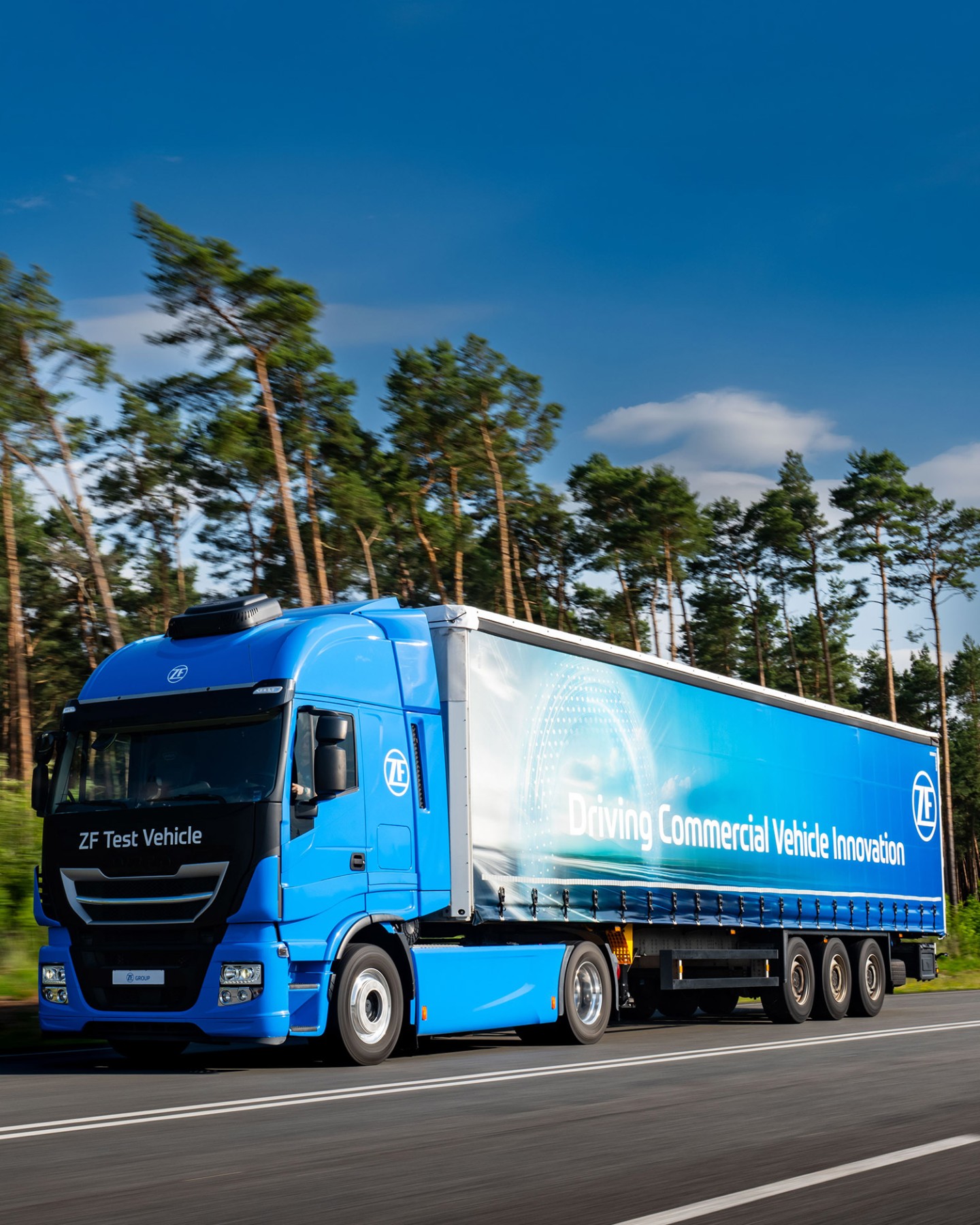
ZF is well aware of this fact and has been working for decades to reduce emissions through its products. Today, ZF engineers hold a powerful lever in their hands with the electrification of driveline technology, whether through hybridization or fully electric drives. A current example is the TraXon 2 Hybrid commercial vehicle transmission, which is now close to series production. It is the electrified version of the highly efficiency-optimized TraXon 2 automated transmission system. Depending on application and market requirements, the TraXon 2 Hybrid will be available for both full-hybrid and plug-in hybrid architectures. As Christian Feldhaus explains: “In commercial vehicles, hybrid technology, together with fully electric drives, makes an important contribution to decarbonization. With TraXon 2 Hybrid, we have developed a pragmatic approach to electrifying heavy-duty drivelines while maintaining both performance and flexibility.” Feldhaus is Vice President of ZF's Commercial Vehicle Transmission and Hybrid Business.
TraXon 2 Hybrid: One Transmission, Two Configurations
For markets with poorly developed charging infrastructure, the TraXon 2 Hybrid in its full-hybrid configuration is the ideal solution. Intelligent control software and topographical data ensure that, for example, the battery is automatically discharged before long downhill sections by switching to electric drive. During the subsequent descent, the battery is then recharged. In addition, the electric machine acts as a generator during braking, storing the recovered braking energy as electricity in the traction battery. The use of the TraXon 2 Hybrid as a full hybrid provides independence from charging infrastructure while significantly reducing emissions from the diesel engine.
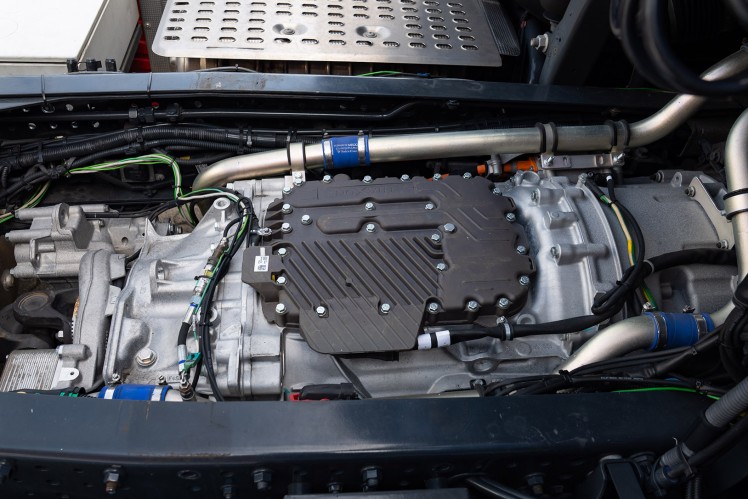
View of the TraXon 2 Hybrid transmission installed in the test vehicle. The transmission control unit, including the hybrid software, is located beneath the dark gray cover on top.
The TraXon 2 Hybrid in its plug-in hybrid (PHEV) configuration is particularly suitable when opportunity charging is available during driving breaks. This can take place both at highway rest areas and at fleet depots. Experts regard Europe as a particularly suitable market for plug-in hybrid trucks. In the PHEV version, the electric motor can also function as a generator. The electric machine, which delivers a continuous output of 190 kW is based on ZF’s modular e-mobility toolkit. It enables a correspondingly high level of energy recuperation. This allows the battery to receive an additional energy boost when required, for example before entering an inner-city no-emission zone.
But that is not all. Precisely because the electric machine is so powerful, it makes it possible to downsize the diesel engine, which in turn has a positive effect on the total cost of ownership (TCO). “By optimizing the operating points of the internal combustion engine and making use of regenerative braking, hybrid systems not only reduce exhaust emissions but also brake-related emissions, which in Europe are likewise covered by the Euro 7 regulations,” says Dr. Matthias Holzer, Global Head of Strategy for the Product Segment Transmissions & Hybrids at ZF.
Incidentally, the electric machine in the TraXon 2 Hybrid transmission is naturally compatible not only with the widely used diesel engine, but also with e-fuel combustion engines and gas-powered engines.
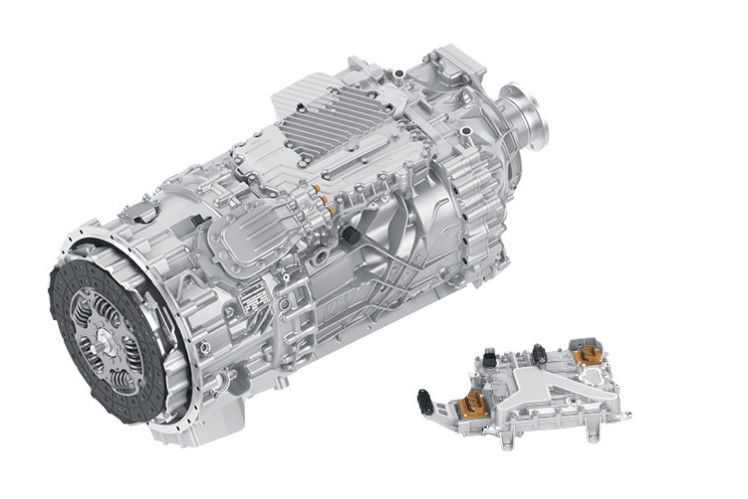
Killing Two Birds with One Stone
Electrification benefits fleet operators in several ways. First, fuel consumption is reduced noticeably from the outset. Hybrid technology also provides freight companies with a gentle entry into electric mobility in the transportation sector. At the same time, the environment benefits as well. With the PHEV version of the TraXon 2 Hybrid, combined with a 100 kWh battery, CO2 savings of up to 28 percent can be achieved, according to the VECTO simulation tool, compared with a conventional diesel-powered truck. With the aforementioned battery capacity, the vehicle can achieve an electric range of up to 80 kilometers – a practical figure, particularly for operating in urban environments. Moreover, the TraXon 2 Hybrid enables all-electric driving at speeds of up to 80 km/h.
Whether used as a full hybrid or a plug-in hybrid (PHEV), the TraXon 2 Hybrid ensures seamless interaction between the electric machine and the internal combustion engine. Another advantage is that ZF’s new hybrid transmission can be integrated into existing vehicle platforms with a manageable development effort. As early as 2030, the TraXon 2 Hybrid could be operating on Europe’s roads, significantly reducing emissions from long-haul transportation.