


Greater Reliability and Efficiency Through AI
As difficult as it is to determine the temperature inside an electric motor, it is just as important for functional development and later operation in an electric vehicle. With “TempAI,” ZF offers an innovative AI-based solution in series production.
Excessive heat is the greatest enemy of electric motors – and thus a major challenge for their developers. When the rotor in an electric motor operates at high speeds, the interior of the e-machine heats up to 100–150 degrees Celsius under high load. If temperatures exceed the permissible maximum for an extended period, this inevitably damages the insulation of the windings and significantly reduces the service life of the drive unit. In addition, overheating in electric motors with permanent magnets (PSM) leads to demagnetization – the motor loses its functionality.
To prevent this, motor developers rely on effective cooling on the one hand and efficient temperature monitoring on the other. Both ensure that the electric machine remains in its optimal operating state. As obvious and straightforward as the need for temperature monitoring may sound in theory, its implementation is highly demanding. “It is difficult to determine the exact temperature inside the motor housing because wired sensors cannot be installed there – there is insufficient space, and it is too hot,” said Alexander Hoffmann, Senior Manager Electrified Powertrain Technology. “Moreover, the effect of oil cooling cannot be simulated with the required accuracy. Tests on the test bench have shown that our simulation models have large deviations; they are not precise enough.”
A Case for AI: Millions of Possible Combinations
This problem can be solved with artificial intelligence (AI). Besides reliable data from inside the motor, there is sufficient information available in the form of measurement data from extensive functional tests on test benches and from test vehicles. Measured temperatures from the motor’s surroundings – such as the oil in the oil pan – are available, as is data on the amount of oil used to cool the electric motor. Rotor speeds are also continuously recorded.
Using these data, developers employ AI to generate reliable predictions of temperature behavior. This is precisely the advantage of AI algorithms: from a vast amount of data, they identify the relationships that are particularly relevant for temperature changes in the rotor and stator. From this, they derive a temperature forecast that nearly matches the actual measurement obtained on the test bench. These temperature predictions can then be used to further refine other functions in the control software. “What’s remarkable is that the temperatures predicted by the AI deviate by only a few degrees from the measured values,” said Hoffmann.
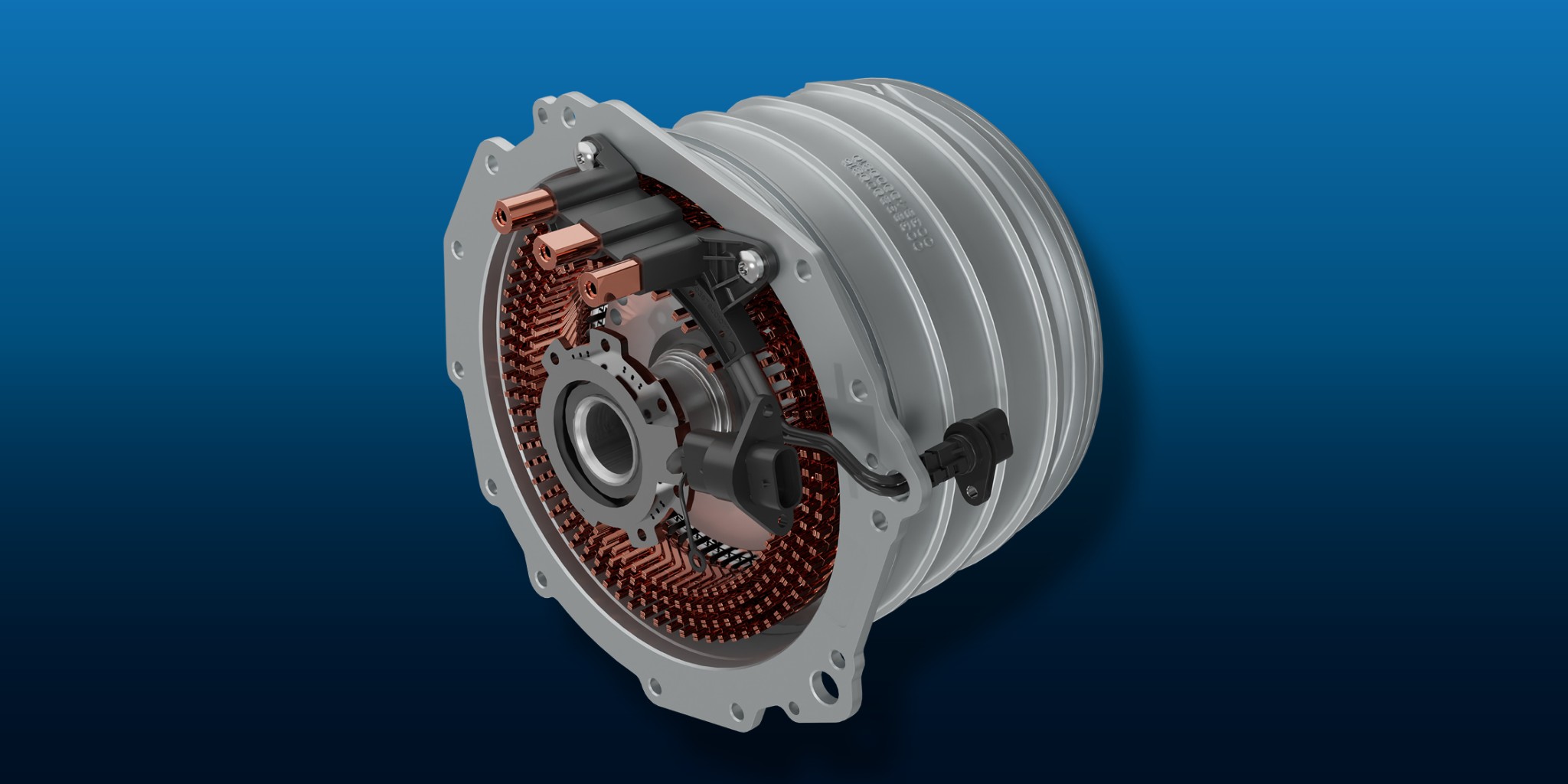


Innovative Thermal Management with ZF’s TempAI
ZF calls this AI-based solution for temperature monitoring in the vehicle’s electric motor “TempAI.” TempAI operates using a self-learning temperature model based on a platform that automatically develops physics-based models from measurement data and makes them operational within a very short time.
“With our technical solution, TempAI, we succeed in further increasing the efficiency and reliability of our drivetrains. At the same time, this new approach demonstrates how data-driven development can be not only faster but also more powerful,” said Dr. Stefan Sicklinger, Head of AI, Digital Engineering, and Validation within Research and Development at ZF.
In addition to performance benefits, TempAI also offers different advantages. Optimized thermal design allows electric motors to be developed precisely, enabling accurate planning of material requirements. Since smaller motors require fewer magnets than bigger ones, manufacturers also save a significant amount of valuable raw materials such as rare earths. At the same time, the use of virtual sensors significantly reduces development time – from several months to just a few days – because AI processes data from test drives and costly test benches very quickly.
ZF Electric Motors Equipped with TempAI
ZF’s TempAI is now in series production and is being used in the new generation of ZF electric motors. It is fully software-based and operates without any additional sensors. This is made possible by a platform that automatically generates physics-based temperature models from measurement data. These models require only minimal computing power and can be executed on existing control units.
Virtual temperature measurements also offer major benefits for manufacturers, as more accurate temperature predictions allow electric motors to operate closer to their maximum permissible operating temperature.