

ZF in Sail Boats


ZF in Sail Boats
Compact and comfortable propulsion
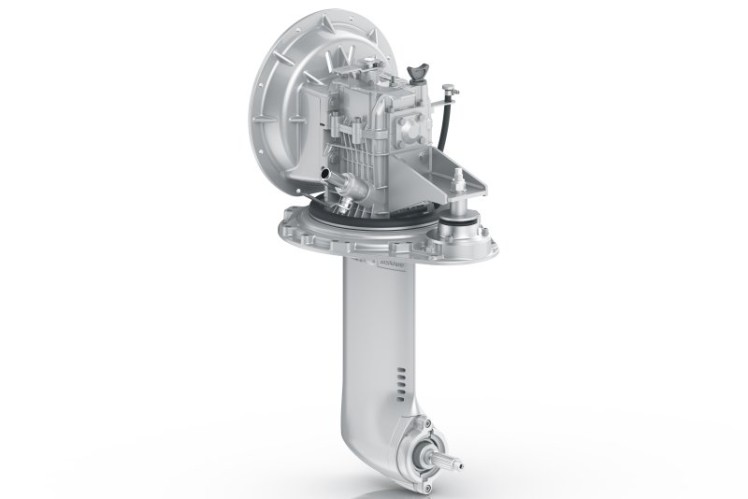
The sail drive is a type of propulsion in which the engine is connected to the propeller by a Z drive kinematic chain: a horizontal propeller shaft connected by a bevel gear to the vertical shaft connected to the clutch by a further bevel gear. The water tightness between the hull and the base plate is ensured by a gasket.
Compared to a traditional shaftline accommodation, the ZF Sail Drive grants several benefits:
- Compactness: it allows to move the main engine close to the stern generating additional space for living areas inside the sailboat
- Comfort: thanks to the installation solution, vibrations and noise are minimal
- Easy installation: the engine and its propulsion come in one piece. By being able to place the engine in front or behind the sail drive, it offers multiple advantages to facilitate the fittings. Additionally, raw-water intake for engine cooling is drawn up through the sail drive leg
- Efficiency: the propeller’s angle of attack is parallel to the surface of the water, which will enhance efficiency
- Maneuvrability: the horizontal propeller configuration helps to minimize traditional prop-walk characteristics common to conventional shaftline configuration
All kinds of propellers can be installed on the ZF Sail Drive (2 or 3 blades, folding or not). Folding blade propellers are often found because sailing enthusiasts are looking for the minimum drag so as not to brake the boat.
The flexibility of the sail drive configuration on a new hull design is compelling: the fact that the engine and drive system form essentially a single unit eases installation, and by design can keep weight “out of the ends,” which is always desirable with sailboats

Product Portfolio
Sail Drive
ZF Sail Drive offers boatbuilders increased design flexibility, allowing the engine to be positioned facing the bow or facing the stern with respect to the transmission. The system considerably reduces vibration and other related propulsion system noise on board, compared to a traditional shaft line system. The most important feature is the ease of installation, as no particular settings or alignments are necessary.
The exceptional efficiency of the ZF Sail Drive is obtained both through reducing the hydrodynamic resistance of the immersed section of the drive, and maximizing thrust efficiency, through a design that positions the propeller exactly parallel to the moving direction of the hull of the vessel.

Control system
ZF control systems represent state-of-the-art in electronics technology.
The products incorporate well-proven hardware and software to ensure reliability, easy operation, and maintenance.
From our comprehensive line of control systems the optimum equipment can be chosen to suit the specific type of vessel or marine propulsion system (single shaft or multiple shaft system).


Impressions
Electric propulsion system for sailing yachts
ZF is currently testing its electric propulsion system concept under real-life conditions. An innovation vessel equipped with the system has been cruising Lake Garda since September 2019.
The prototype comes with a 60 kWh lithium-ion battery and achieves an average sustained speed of 7 knots (13 km/h) with a range of around 30 nautical miles (55.5 km). The battery pack is positioned at the stern and is provided with a cooling system for best performance. For this new electric propulsion system, ZF uses an electric motor with a maximum output of 125 kW instead of the usual diesel unit. The electric motor connects to the ZF Steerable Pod Propulsion system (SPP) where maneuverability is further improved thanks to smooth control of the electric motor with no clutches.