

4 Important Brake Safety Tips
Be prepared for a roadside inspection this Brake Safety Week with our top brake safety tips.
Be ready for a roadside inspection by ensuring your brakes are in good shape.
Our top 4 brake safety tips for commercial vehicles will help you identify common brake issues.
It's that time again - Brake Safety Week. Happening from August 25-31, 2024, this an annual week-long road check organized by the Commercial Vehicle Safety Alliance (CVSA) aims to promote road safety by helping to ensure commercial vehicles across the United States and Canada have properly functioning brakes.
This year, the focus is on pad lining and pad wear. We're here to help you find common brake issues by providing our top four brake safety tips below for heavy-duty vehicles that use either drum brakes or air disc brake systems. For more tips and resources, visit CVSA's website which offers guides and checklists to help prepare drivers, motor carriers, owner-operators and mechanics.
TOP 4 BRAKE SAFETY TIPS
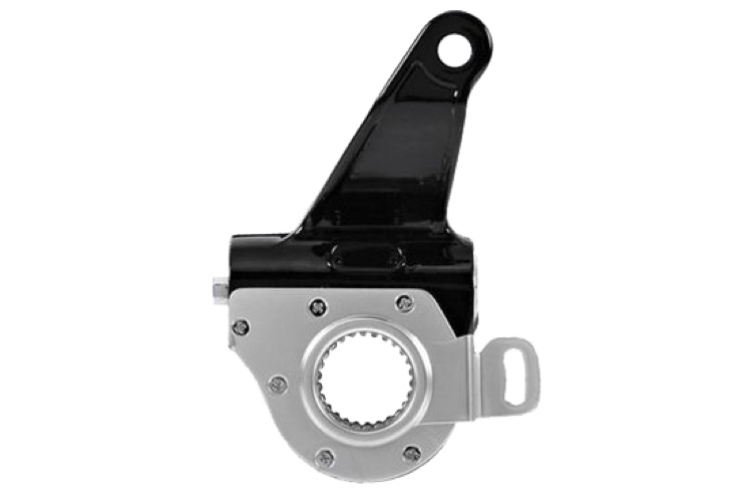
1. Check the drum brake's slack adjuster for proper adjustment and functionality.
When it comes to drum brakes, the slack adjuster is a critical component that connects the brake chamber push rod to the brake camshaft. It is designed to adjust the brakes automatically as the brake shoe friction wears down. A properly adjusted slack adjuster helps ensure that your brakes respond optimally when you apply them.
Here's what you can do:
- Park your vehicle on level ground, engage the parking brake, and chock the wheels.
- Inspect the foundation brakes, including the slack adjuster, for signs of damage excessive wear, or components seizing.
- By checking free stroke and applied stroke, you can make sure the foundation brakes are not over-adjusted or under-adjusted. The applied stroke should be to Federal regulations. The free stroke should be to industry standards.
2. Inspect the air system to ensure there are no leaks.
Air brakes rely on compressed air to function. Air leaks may cause your compressor’s duty cycle to become excessively overrun and saturate your dryer cartridge. Regularly inspecting the air system for leaks and proper dryer maintenance is crucial.
Follow these steps:
- Drain air tanks to remove moisture. If excessive moisture is present, the dryer cartridge may need to be replaced. A root cause for this issue could be high dryer inlet temperatures or excess compressor duty cycle, as stated above.
- Start the engine and verify the system builds to proper cut-out pressure, which is typically between 125 and 140 PSI for trucks. Apply and release the brakes to bleed pressure down and verify cut-in pressure is greater than 100 PSI for trucks.
- With the air system pressurized, shut the engine off and turn the key back on. Release the parking brakes and hold the brake pedal all the way down. Make sure your pressure gauges do not drop more than 4 PSI per minute (for a standard combination vehicle). It may also be helpful to have someone listen for air leaks while doing this test.
- With the engine still off and the park brakes released, pump the brake pedal to bleed pressure down. Verify the low-pressure light warnings come on at or above 60 PSI and the park brake valves pop around 20-40 PSI.
3. Check for missing, non-functioning, loose or cracked parts in the wheel end.
The wheel end houses components, including brake rotors or drums, brake pads or shoes, and bearings. A damaged or corroded wheel end can lead to brake failure, making regular inspections vital.
Here's what to look for:
- Examine the brake rotors or drums for cracks, scoring, or other signs of wear.
- Check the brake pads or shoes for even wear and sufficient thickness.
- Ensure the wheel seals are not leaking and bearings are adequately lubricated and free of play.

4. Pay attention to dashboard warning lamps, including ABS and low-pressure warnings.
Modern vehicles are equipped with advanced safety systems, and the dashboard warning lamps are there to keep us informed about any potential issues. Ignoring warning signs can lead to severe consequences.
Take these steps:
- Before starting your trip, conduct a visual check of the dashboard for any warning lamps.
- If any of the warning lamps such as ABS (Anti-lock Braking System) are illuminated, address the issue promptly by seeking professional assistance.

Brake Safety Week is an excellent opportunity to prioritize road safety by ensuring your truck's brakes are operating safely. Regular inspections and maintenance are key in helping to prevent accidents and improve the safety of drivers, passengers, and road travelers.We hope you found our top 4 brake safety tips for heavy duty vehicles helpful.
ZF Commercial Vehicle Solutions (ZF CVS) is helping shape the future of North America commercial trucking and transportation. ZF CVS delivers technologies spanning from chassis and vehicle dynamic controls to driveline systems, telematics, and more; all brought to you by brands you know and trust – ZF, Lemforder, Sachs, TRW and WABCO.