
Hidden Lifelines
Tunnels underneath cities or even entire mountains are an integral part of the concept of safe and sustainable mobility. ZF technology ensures reliable tunneling through the toughest rock for rail and road transportation.
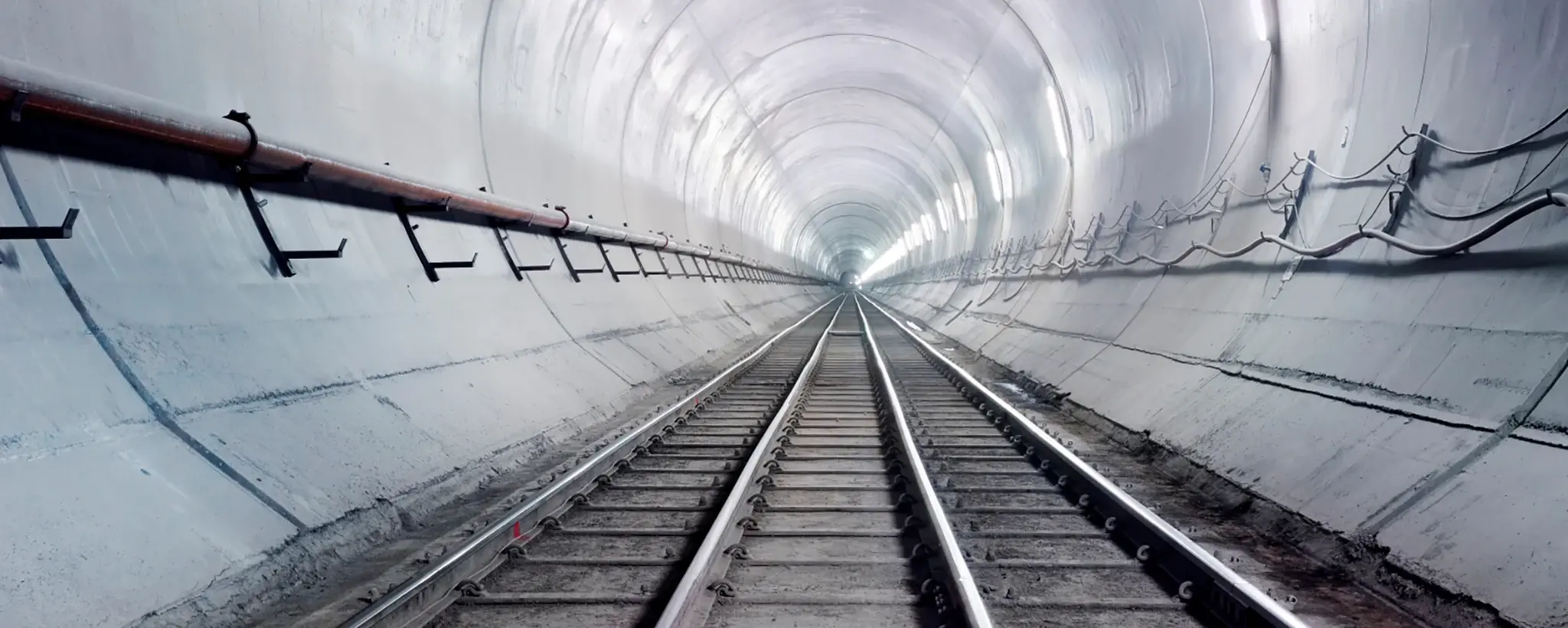
These are probably the most spectacular 17 minutes a person can experience on a train journey. And yet the 17 minutes feel so incredibly unspectacular. It's precisely how long a high-speed train needs to enter the Gotthard Base Tunnel at 200 km/h near the Swiss town of Erstfeld and emerge 57 kilometers later in Ticino near Bodio. Now, the passengers have not only passed through the mighty Gotthard Massif in what is currently the longest railway tunnel in the world, but at the deepest point they even had a mind-boggling 2,300 meters of rock above them. That's another world record.
A brand new pair of single-track tubes have been available for passenger and freight transport through the Gotthard since 2016. This high-speed line through the Gotthard Base Tunnel is an important link in the European railway network between Italy and Europe north of the Alps. Compared to the Gotthard Summit Tunnel of 1882, which lies 600 meters above the base tunnel, the new route significantly reduces travel times. In addition, freight trains can transport significantly more goods through the horizontally aligned base tunnel with a single locomotive than through the still used summit tunnel with two locomotives. Enhancing rail transport efficiency and encouraging people to transition from road transport to the more eco-friendly rail option are essential steps toward achieving sustainable mobility. Tunnels such as the Gotthard Base Tunnel make a significant contribution to this on a global scale.
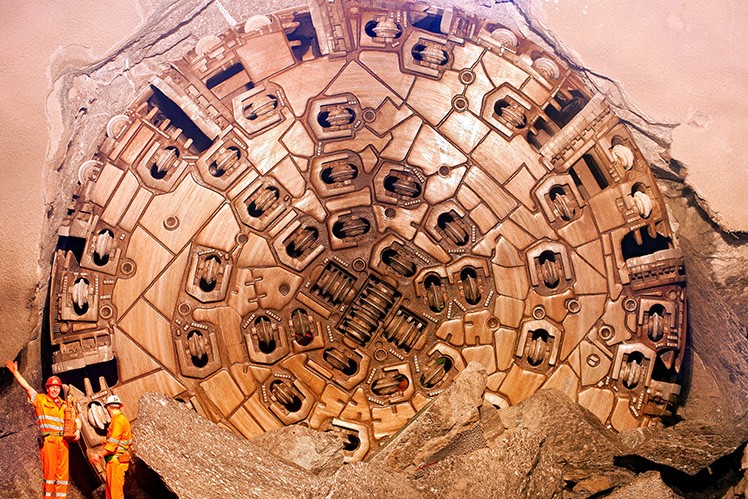
Drilling head of a tunnel boring machine (TBM) with roller cutters
Sustainable Road Construction with ZF Technology
In many places, tunnels are indispensable for Next Generation Mobility, which ZF is helping to promote. The technology company has been providing its expertise in tunnel construction for more than three decades. To date, ZF has delivered over 4,000 large gearboxes for the often several hundred meters long tunnel boring machines (TBMs) to the biggest manufacturers worldwide. ZF supplies the transmission technology for many of the current major tunnel construction projects. Examples include the second tube of the Gotthard Base Tunnel and the Brenner Base Tunnel for trains, as well as the subway tunnels of the Grand Paris Express or Los Angeles Metro projects.
During the construction of the Gotthard Base Tunnel, two tunnel boring machines from the German market leader Herrenknecht AG burrowed through the Gotthard Massif – one from the north and one from the south. Each of the four giant moles was equipped with ten Redulus GME 200 planetary gearsets from ZF, which reliably rotated the cutter heads, each fitted with 66 roller cutters, and each with a diameter of nine and a half meters.
Reliability is Key
Every time the cutter head rotates, applying several tons of pressure, its cutters break rock from the rock mass, which is then transported out of the tunnel behind the TBM on conveyor belts. In tunnel construction, maximum robustness and absolute reliability of the drive technology are crucial. "There are few applications in the industry that work under such difficult conditions: vibrations, water, dirt, heat, as well as constantly fluctuating loads on the transmission," explains Ralf Matke and adds: "Any TBM downtime will very soon cost you several thousand euros – per hour." Matke is Head of Product Management for Industrial Drives at ZF.
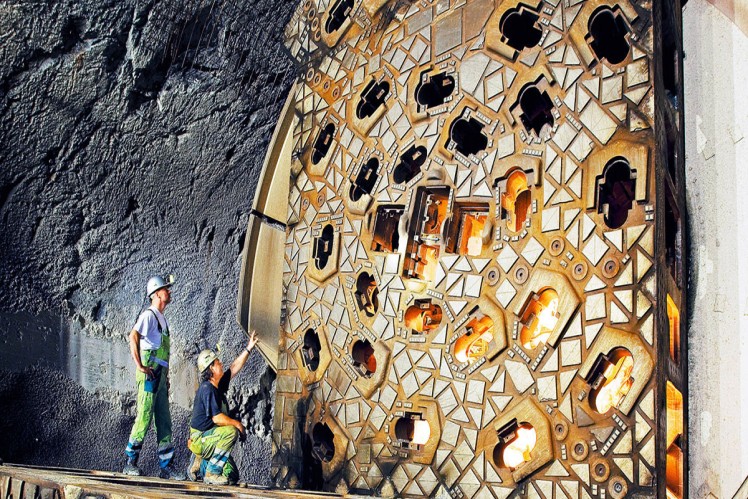
Disassembly of a tunnel boring machine (TBM) in the eastern tube of the Gotthard Base Tunnel
However, tunnels aren't just structures for environmentally friendly rail transport; they are also essential in cities. According to the World Bank, more than half of the world's population now lives in cities, and this number is rapidly growing. For example, tunnels with smaller diameters are dug to house water, wastewater and gas lines as well as power or data cables. In contrast, large city tunnels form the underground backbone for fast, safe and clean mass transit systems like metros and high-speed trains. Their tubes often run at a depth that could hardly be utilized in any other way. Car tunnels, in turn, relieve roads on the earth's surface and could even render them unnecessary. That's how urban planners would gain new space for houses and green areas, thus improving air quality and quality of life, especially in large cities.
Durability in XL Format
Since tunnel boring machines are built individually for each project and because the size of tunnels is generally not standardized, ZF has a wide range of planetary gears for hydraulic or electric drives. Cutter head diameters usually lie somewhere between 6 and 18 meters. Depending on the tunnel diameter, a TBM requires between 4 and 20 transmissions. The transmissions have a service life of 5000 hours or more. Depending on the tunnel length, this is sufficient for one to three projects. But even after that, they haven't reached the end of their useful life yet. Thanks to servicing and refurbishment, the service life can be doubled.
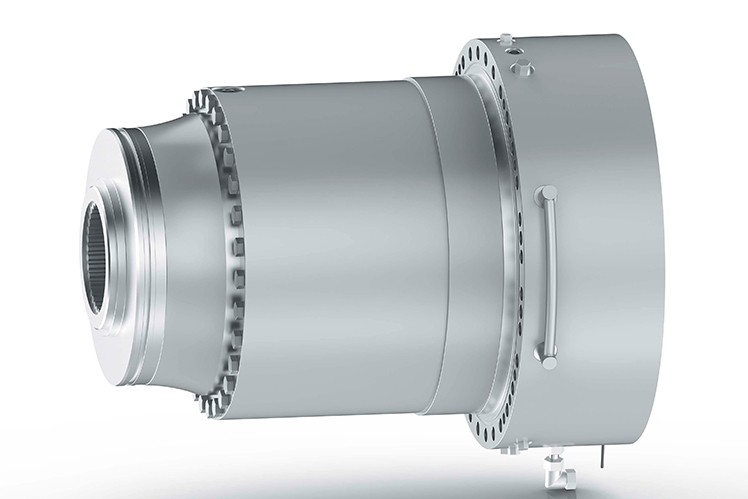
The compact and low-maintenance Redulus GME200 industrial drive from ZF, as used in tunnel boring machines.
And, since the transmissions are like new after a complete overhaul, they start their second life with a full warranty again.