Maritime Electrification for the E-Volution at Sea
Electronics and mechanics – ZF FutureStarter Alexander Thum has always been fascinated by this mix. It’s no wonder, then, that these areas play a part in his professional life as a trained mechatronics and mechanical engineer. But not in the automotive sector, as you might expect for someone working at ZF – rather, in the shipping industry.
ZF bundles its activities for “beyond the road” applications within its Industrial Technology Division to serve market segments including wind power generation, shipping and rail technology. Alexander Thum’s work is primarily concentrated on the electrification of marine propulsion systems – with the goal of reducing both emissions and noise pollution. With the expansion of its product portfolio to include electrified drives, ZF's maritime segment is setting a new course.
As this FutureStarter Alexander sees it, the maritime sector is rather conservative. The reason is obvious: the service life of marine propulsion systems is significantly longer than that of passenger car drives. This is a requirement that’s accounted for in the design phase and which is reflected in the high quality of ZF products. As a result, though, manufacturers haven’t deviated far from the tried and tested, and it’s difficult to establish new technologies. But there’s a need for change: “At around 2.5 percent, shipping makes a significant contribution to global CO2 emissions,” the 33-year-old points out.
“The umbrella organization of international shipping, the International Maritime Organization (IMO), has set itself the ambitious goal of being climate neutral by 2050. For example, there are already ports in Norway where ships are only allowed to enter with electric drives. However, the industry still has a lot of catching up to do in the future.”
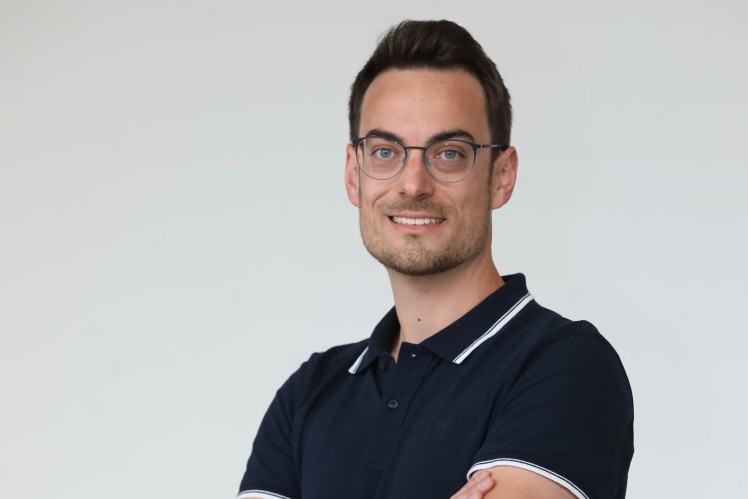
Researching new technologies and innovations is a constant source of inspiration and motivation for FutureStarter Alexander Thum.
The Transformation from Mechanical Drive Specialist into System Provider for Electrified Drives
This is exactly what ZF's maritime segment is working on. “When I started here in 2016, the objective was to develop from a leading global supplier of drive technology for ships into a system provider for electrified drives,” says Alexander, describing the situation at the time. “My task was to find suitable e-machines and power electronics that would allow us to cover a range of between 120 and 750 kW continuous power.” It posed an exciting challenge for the young engineer, as his developments were almost exclusively accomplished in a solitary fashion, with almost no synergies with other teams or divisions. “With our high level of system performance, we enjoy a truly unique position within the Group,” he explains. “At best, products can be adapted from the commercial vehicle sector. For example, instead of compact control units, ships tend to have entire control cabinets as electronic control centers.”

In his eight years in the marine sector at ZF, Alexander's area of focus has expanded considerably. “I also take care of the drive peripherals, the so-called Human Machine Interfaces (HMI) such as control levers and displays, as well as the accompanying control systems for transmissions, electric motors and diesel engines,” he says, describing the scope of his department’s work.“ The opportunity to play an active role in the decarbonization of the maritime industry and to work on developing sustainable products makes me proud. Electrified drives from ZF meet both the human need for mobility and the challenge of massively reducing greenhouse gas emissions,” adds Alexander.
Then again, there are the other, somewhat less ‘serious’ use cases he’s worked on. With a twinkle in his eye, Alexander describes one special request in particular: “It involved a yacht with a tennis court on board, where the vibrations and noise of the diesel engine were obviously interfering too much with the players’ ability to concentrate on their game.” However, Alexander says he doesn’t know if the electric drive improved the players’ serves or volleys.
The progress being made in electrified drive technology is evident in the latest addition to the product portfolio: the new hybrid module. This drive solution consists of a hybrid gearbox, an electric motor, flexible coupling and a support frame. “The high level of integration of the electric motor with the gearbox by means of a support frame creates massive package advantages and enables a less complicated way to electrify both new and existing ship designs,” emphasizes Alexander. In 2023, the first hybrid module from ZF was delivered to an exclusive shipyard in Italy’s Liguria region. The complete solution will be presented for the first time publicly at the SMM in Hamburg, the world's leading trade fair and conference event for the maritime industry, from September 3-6, 2024.
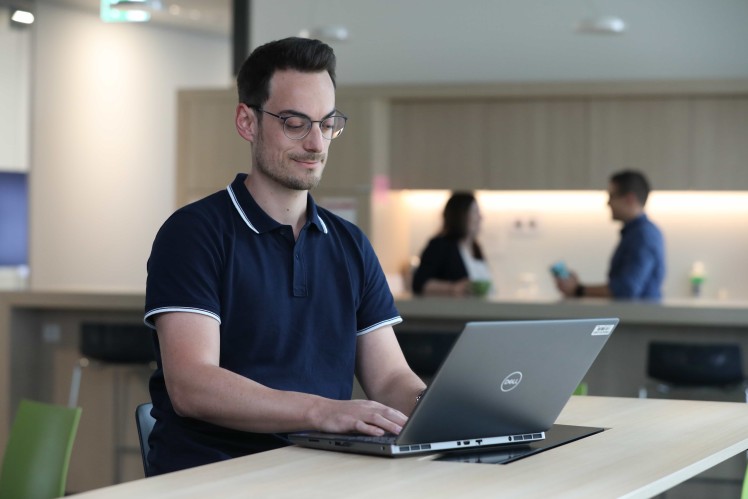
Alexander is proud to play an active role in the decarbonization of the maritime industry.

A Passion for Electronics and Mechanics That Started Early
Alexander says that researching new technologies and innovations is a constant source of inspiration and motivation for him. It’s the energy that drives his developer heart. “Even as a teenager, I was particularly interested in the interplay between electronics and mechanics,” he recalls. “I was excited about working on remote-controlled model cars and experimented a lot with electric motors, their controls and drives.” So it seemed totally logical that he decided on an apprenticeship as a mechatronics technician at ZF after leaving school in 2007 – an experience he still raves about today: “We were only the second cohort to do this apprenticeship. We got to know so many departments and got many deep insights into the Group”.
Following his apprenticeship, Alexander immediately completed his technical college entrance qualification so he could begin his mechanical engineering studies with a specialization in automotive engineering in 2012 with the support of a ZF scholarship. A semester abroad in Hong Kong was a particular highlight for him. “Pretty interestingly, the proximity to water has always accompanied me – from Constance, to Hong Kong, to Friedrichshafen. And working to reduce CO2 emissions is also very important to me in my private life. That's why I use an electric motorcycle that is charged with solar power for my commute to work,” this FutureStarter concludes.