
Powering the Guardians of Waterway Transportation & Trade
It's hard to overstate the importance of tugboats. From harbor-assist and offshore support to inland waterway transportation, these powerful marine assets provide diverse, yet critical, support that keeps traffic and projects moving, ships supplied and crews safe for many of the high-risk conditions inherent with waterway transportation and trade.
For Tugboats, Power Matters Most
Tugboats are their own vessel class with various applications for mega-ships, barges, oil platforms and more. One of the most critical factors in a tugboat’s power is its propulsion system. Why? While an average tug runs on an engine between 680 and 3,400 horsepower (500-2500 kW), those used in deep waters contain engines close to 27,200 horsepower. This power is reflected in their high power-to-tonnage ratio, ranging from 2.20 to 4.50 for large tugs and even higher (4.0 to 9.5) for harbor tugs. This is a marked contrast to cargo ships and other vessels, which typically have a much lower ratio, between 0.35 and 1.20. To have such a critical role in the operations it supports, it needs robust, reliable components itself. ZF proudly powers tugboats with transmissions, control systems and thrusters so that these specialized vessels can perform their high-stakes work in nearly any circumstance. Below is a summary of three main types of tugs that ZF equipment powers:
1. Harbor-Assist Tugs
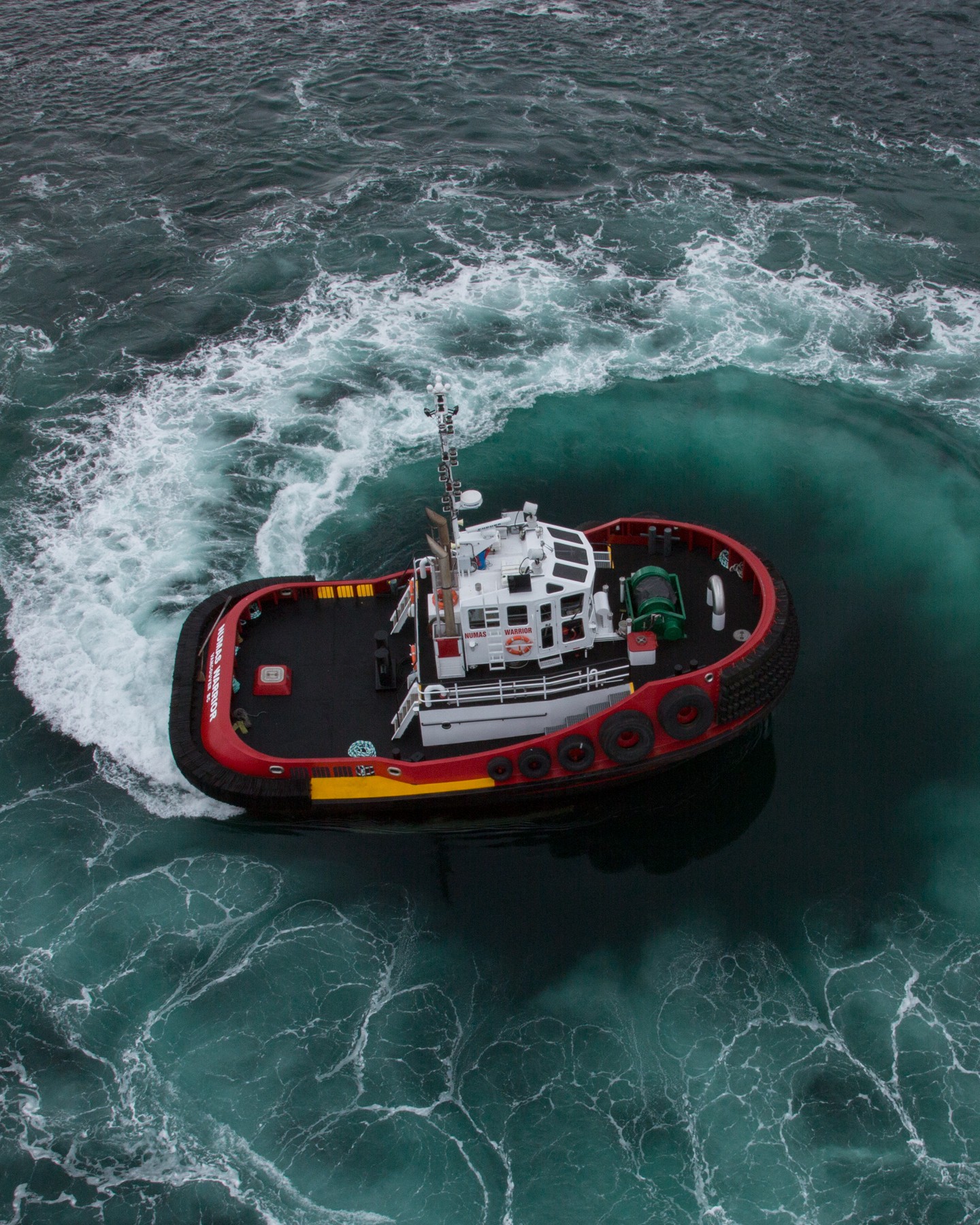
Harbor-assist tugs are all about maneuverability and brute pulling power, measured in bollard pull (not horsepower). Their primary function is the safe navigation of cargo ships and tankers entering and leaving harbors. These harbor guardians often wear multiple hats, acting as emergency responders for fire (thanks to fire monitors onboard), spill cleanups, or search and rescue missions. As such, a tug failure in this environment could be catastrophic. Notably, many of these vessels rely on ZF propulsion systems and Azimuth thrusters (Z Drives) that provide superior 360-degree maneuverability. These systems ensure the tug can respond in any way a larger vessel may require.
While fully electric harbor tugs might be a future possibility, hybrid solutions are a more realistic option today. Generally consuming 30 to 60 percent less fuel than traditional tugs, adoption is accelerating, with ZF equipment helping to make the switch possible.
2. Offshore Support Tugs
Outside of harbors, offshore support tugs provide vital services for oil rigs, wind farms and other offshore operations. Bollard pull is again a key factor in this application. These multi-functional vessels can handle a variety of tasks, from anchoring drilling rigs to towing platforms and transporting supplies. The required pulling power heavily influences the design of these vessels, dictating propeller size, hull shape, and depth.
3. Inland Waterway Tugs
This type of tug specializes in river operations, pushing barges loaded with cargo like oil, coal, sand and agricultural goods. Here, horsepower takes center stage over bollard pull. The vast network of inland waterways in the U.S. is critical for domestic trade, covering 12,000 miles of commercially navigable channels to serve 18 states and many industrial and agricultural centers. To keep this commerce flowing, these tugs navigate an environment challenged by heavy traffic, varying water levels, strong currents and tight turns. Often, the cargo they carry is hazardous or time-sensitive, raising the stakes for safe and efficient operations. Traditionally, ZF has supported inland waterway tugs with a range of horsepower options, and in 2007, revolutionized the industry by developing the first-ever azimuth (AZ) thrusters specifically designed for these inland vessels. This innovation provided superior control and maneuverability, proving to be not only safer but also more cost-effective for operators.
ZF Marine continues to set the industry standard for both marine propulsion systems and thrusters, as well as hybrid options as more vessel manufacturers commit to reducing emissions and more sustainable operations.
Our Commitment to Customers
Beyond these products, ZF supports clients with top-notch customer care. The company often offers same-day service and delivery, and extended warranties. Customers can also benefit from the worldwide availability of spare parts through all the ZF service points in the global ZF Marine network. Thanks to the ZF Service Readiness Program with selected and qualified service partners, spare parts and service expertise are 24/7 available worldwide. Find a dealer closest to you on ZF’s Dealer Map, and download the new app for our suite of customer services at your fingertips.